.svg)
Are your web applications secure? Hackers exploit common, easy-to-fix flaws that traditional penetration testing firms miss or take months to find. We deliver fast, affordable manual pentests that find real vulnerabilities, with reports in your hands within a week.
Understand SQL Injection Vulnerabilities
SQL Injection (SQLi) is a classic attack where a hacker inserts malicious code into a form on your site. Think of a login box. If it's not secure, that code can trick your database into spilling secrets or even letting the attacker take over.
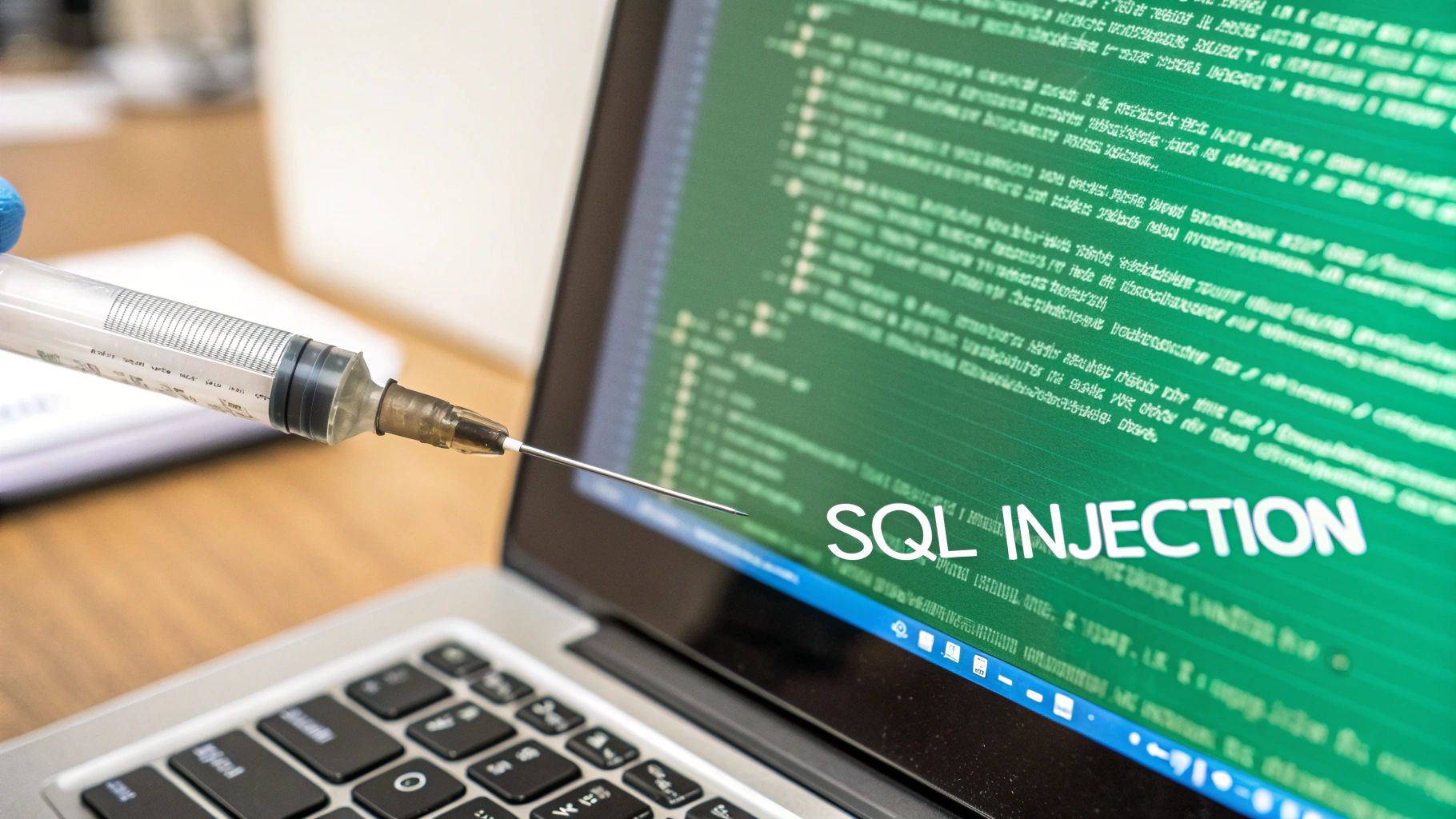
The result is a disaster. Attackers can steal customer data, credit card numbers, or wipe your database clean. This isn't a complex hack. It's a common oversight that automated tools can find and exploit easily, making it a favorite for attackers.
To stop SQLi, you must treat all user input like it's hostile. Use modern coding practices that separate commands from data. Our OSCP and CEH certified pentesters find these flaws fast so you can fix them before a breach happens, helping you pass compliance audits like SOC 2 and PCI DSS.
Identify Cross-Site Scripting (XSS) Risks
Cross-Site Scripting (XSS) tricks your website into running malicious code in your users' browsers. The hacker injects a bad script into a comment section or profile page. When another user visits, the script runs, thinking it came from your trusted site.
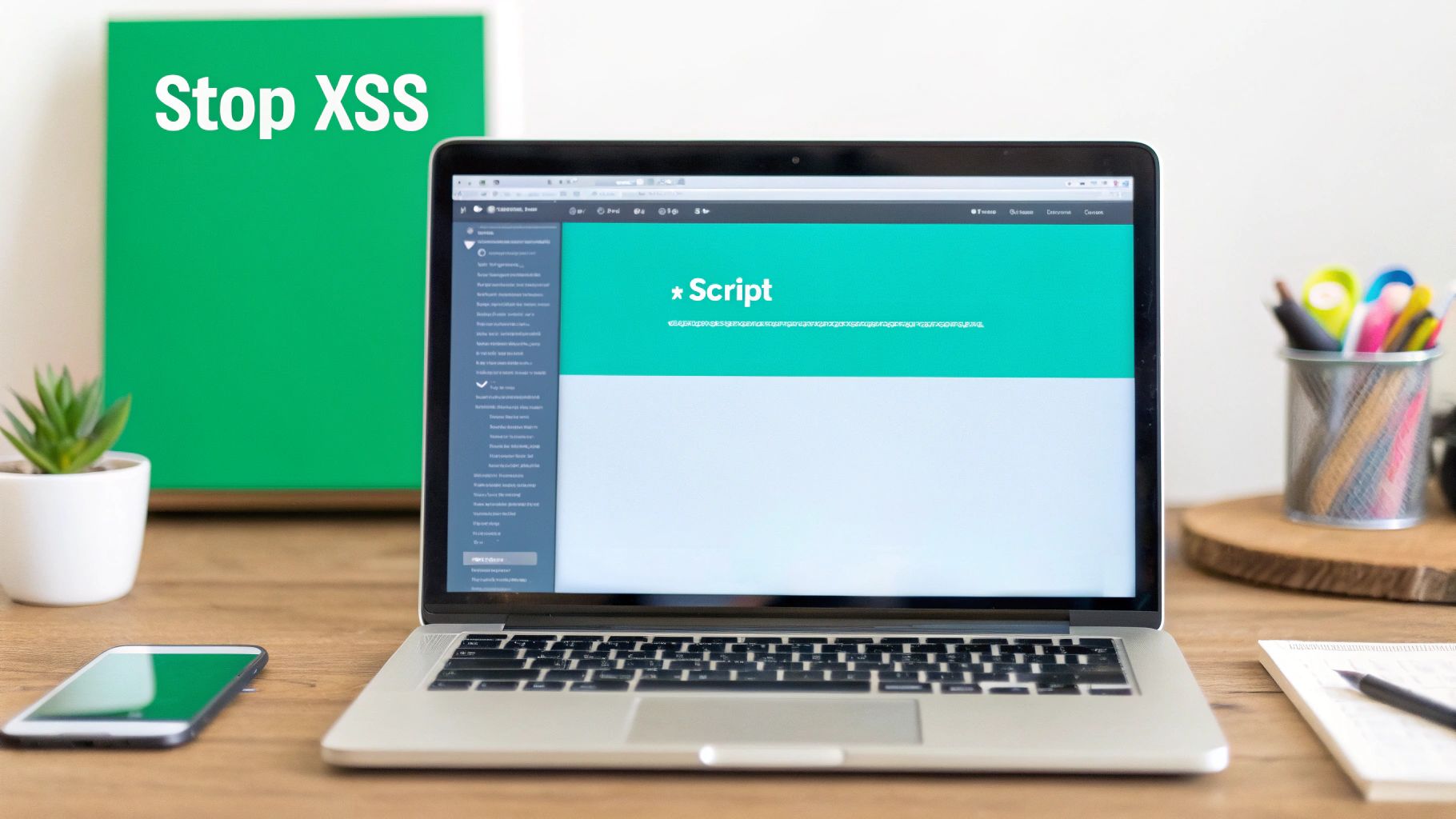
This attack hijacks user sessions, steals credentials, or sends your visitors to phishing sites. It damages your reputation because your application was used as the weapon. If your site displays any content from users, you are a prime target for XSS.
Fixing XSS means properly cleaning up any data before you display it back to a user. It's simple in theory but tricky in practice. Our affordable manual pentests find where you're vulnerable, delivering a clear report in under a week so you can protect your users.
Prevent Cross-Site Request Forgery (CSRF)
Cross-Site Request Forgery (CSRF) exploits the trust your application has in a logged-in user. An attacker tricks a user into clicking a malicious link that secretly sends a command to your app. Since the user is logged in, your app obeys the command.
The attacker doesn't need the user's password, just an active session. They can force the user to change their email, make a purchase, or transfer funds without their knowledge. This is a sneaky attack because the requests look completely legitimate.
The best defense is using anti-CSRF tokens, which act like a secret handshake for every request. An affordable pentest from our CREST certified experts is the fastest way to confirm your defenses work correctly, a key step for meeting SOC 2 and PCI DSS requirements.
Fix Broken Authentication and Session Management
Broken Authentication is a category of mistakes in how you handle logins and user sessions. This includes everything from weak password rules and insecure storage to letting attackers easily guess session IDs. It's like leaving the keys to your front door under the mat.
These flaws lead directly to account takeovers. A single compromised admin account can give an attacker full control of your system. Examining login pages, like Whatpulse's login page, helps pentesters find these weaknesses.
Protecting accounts is non-negotiable. You need strong passwords, multi-factor authentication (MFA), and secure session management. Our affordable manual pentests quickly find these weaknesses, giving you a clear report to help you secure user accounts and pass compliance audits.
Stop Sensitive Data Exposure Vulnerabilities
Sensitive Data Exposure happens when your application leaks private information. This could be customer names, credit card numbers, or health records. It happens when data isn't encrypted properly when it's sent over the internet or stored in your database.
The consequences are huge, including massive fines under GDPR and HIPAA, customer lawsuits, and a complete loss of trust. If you store any data you wouldn't want on a billboard, you are a target. Attackers don't need to be brilliant hackers if you leave your data unprotected.
The fix is to encrypt everything, everywhere. Encrypt data in transit and at rest. Don't collect data you don't need. Our certified pentesters find where your data is exposed quickly and affordably, which is a core requirement for SOC 2, PCI DSS, and HIPAA.
Remediate Broken Access Control Flaws
Broken Access Control means a user can do something they shouldn't be allowed to do. Think of a regular user who can access an admin page just by typing in the URL. This isn't about stealing a password; it's about your app failing to check permissions.

This is one of the most common and damaging web application security vulnerabilities. An attacker can view other users' data or even gain full admin control. Just because a link isn't shown on the screen doesn't mean it's secure. You can learn more about OWASP's view on Broken Access Control.
Your application must check permissions on the server for every single request. Our affordable manual pentests are designed to find these hidden flaws. We think like hackers to test your boundaries, delivering actionable results in days, not months.
Correct Critical Security Misconfigurations
Security Misconfiguration is simply human error. It's using default passwords, leaving cloud storage open to the public, or showing overly detailed error messages. It's one of the easiest ways for an attacker to get in because you've left the door open for them.
The impact can be devastating. Attackers use automated scanners to constantly search for these easy targets. A simple mistake can expose all your customer data or give an attacker a foothold in your network.
Preventing this requires a repeatable, secure process for setting up your systems. Change all defaults and patch everything promptly. Our affordable pentests are perfect for finding these gaps, providing a fast and thorough audit of your configurations to meet compliance standards.
Uncover XML External Entity (XXE) Injection
XML External Entity (XXE) Injection is an attack against apps that process XML data, a common format for data exchange. If not configured correctly, an attacker can upload a malicious XML file that tricks your server into reading local files or scanning your internal network.
The results are serious. An attacker could steal configuration files, private keys, or use your server to attack other systems on your network. If your application accepts or parses XML from any source, it could be vulnerable.
The solution is to disable risky features in your XML parser and validate all incoming data. An affordable manual pentest from our OSCP-certified experts can quickly find if your app is vulnerable to XXE, helping you secure your data and meet PCI DSS or SOC 2 requirements.
Defend Against Insecure Deserialization Attacks
Insecure Deserialization is a complex-sounding but dangerous vulnerability. It happens when your application rebuilds data from a stream into an object in memory. If an attacker can control that data, they can trick your app into creating malicious objects that execute code.
This flaw can lead to complete server takeover. The attacker can run their own commands, steal data, or crash your system. It's a powerful attack that turns your application's own logic against itself.
The safest approach is to avoid deserializing data from untrusted sources. If you must, use strict checks to ensure the data hasn't been tampered with. Identifying these deep flaws requires expert analysis like a security code review or a manual pentest, which we can provide quickly and affordably.
Manage Components with Known Vulnerabilities
Modern applications are built using many third-party libraries and frameworks. This vulnerability happens when you use a component that has a known, publicly disclosed security flaw. Attackers constantly scan the internet for applications using these outdated parts.
The impact is massive because one bad library can affect thousands of companies. Famous breaches like the one at Equifax happened because of this exact issue. Your application is only as secure as its weakest link, and attackers know this.
You must keep an inventory of all your components and update them as soon as security patches are released. Following a clear vulnerability management process is key. Our affordable pentests check for these vulnerable components and show you how an attacker could exploit them in your environment.
Find and Fix Your Web App Vulnerabilities
You now know the top 10 ways hackers break into web applications. These aren't secrets. They are common, well-understood flaws that exist in thousands of applications today, from startups to Fortune 500 companies. The real question is, are they in yours?
Knowing is just the first step. Automated scanners only find the most obvious problems and miss the critical business logic flaws that lead to major breaches. You need a human expert who can think like an attacker to find the vulnerabilities that matter.
This is where we come in. You don't need a six-figure budget or a six-month wait to get a high-quality penetration test. We provide affordable manual pentests from certified experts who find real-world vulnerabilities and deliver an actionable report in under a week.
Many businesses use comprehensive website security products alongside pentesting to create a strong defense. This combination of expert analysis and protective tools is powerful. But it starts with knowing where your weaknesses are.
Don't wait for a breach to find out you're vulnerable. Proactively testing for these common web application security vulnerabilities is the best way to protect your customers, your data, and your reputation. It is also essential for meeting compliance standards like SOC 2, PCI DSS, and HIPAA.
We are the affordable, fast alternative to traditional pentesting firms. We find more vulnerabilities and deliver your report faster, without the enterprise price tag. Securing your application is easier and more affordable than you think.
Ready to uncover these vulnerabilities in your own applications without the high costs and long waits? Affordable Pentesting provides fast, manual penetration tests performed by OSCP and CEH certified experts, delivering actionable reports in under a week. Visit Affordable Pentesting to get a quote and secure your applications today.