.svg)
Facing an IT audit can feel like a pop quiz you never studied for. You're scrambling to find documents and hoping you haven't missed anything big. The good news is you don't have to start from zero. Using the right IT audit checklists saves you time and makes sure you cover what auditors actually care about.
This guide gives you the best resources for audit checklists, from official sources like NIST and ISACA to practical templates you can download. These tools give you a clear map for organizing your security controls, gathering proof, and walking into your next audit with confidence.
Whether you're dealing with SOC 2, ISO 27001, or just want to improve your internal security, this list will help. Each one has a direct link and a simple explanation of what it’s for. Forget reinventing the wheel and find the checklist you need to get ready, prove compliance, and stop dreading audit season.
Find the Best IT Audit Program Checklist
For IT teams that need official, audit-ready documents, ISACA is the global standard. This platform offers a huge library of IT audit programs and checklists made by industry experts. These are not simple lists; they are complete plans with clear goals, test steps, and evidence requirements.
ISACA's resources help you structure formal audits that line up with frameworks like COBIT and NIST. Instead of building your audit plan from scratch, you can download a ready-made program for things like cloud security or AI governance. This saves a ton of time and makes sure your audit process follows best practices.
While these programs provide a strong foundation, a real-world security test shows if your controls actually work. This bridges the gap between just being compliant and being truly secure.
Best Use Case: When you need a formal, defensible work program for an internal or external audit that requires direct traceability to established frameworks.
Limitations: The primary drawback is cost, as most high-value programs require payment. The website's navigation can also feel dense for newcomers due to the sheer volume of resources available.
Website: https://www.isaca.org/resources/insights-and-expertise/audit-programs-and-tools
Use CIS Benchmarks for Hardening Systems
The Center for Internet Security (CIS) gives you the technical configuration checklists. CIS Benchmarks are the industry standard for securing operating systems, cloud services, and applications. They are detailed guides that serve as a direct, testable IT audit checklist for how your systems are set up.
Auditors often use CIS Benchmarks when they check system configurations. Instead of guessing what a "secure" server looks like, you can download a benchmark for Windows Server or AWS and get hundreds of specific settings to check. Each recommendation tells you why it's important and how to fix it, making it perfect for system admins and auditors.
These benchmarks provide the granular detail needed to validate your security controls. Combining them with a broader risk assessment ensures you cover everything from the operating system up to your business processes.
Best Use Case: When you need a detailed, authoritative checklist to audit the security configuration of a specific technology platform, server, or application.
Limitations: The free PDF versions are static and cannot be easily customized or integrated into automated tools. The benchmarks are purely for configuration hardening and do not cover broader IT process controls like change management or incident response.
Website: https://portal.cisecurity.org/benchmarks
Get Authoritative Checklists from NIST Documents
When you need an audit program based on a primary source, the National Institute of Standards and Technology (NIST) is the best resource. NIST provides detailed assessment procedures that serve as federal-grade IT audit checklists. These documents give you control-by-control objectives and specific ways to verify them.
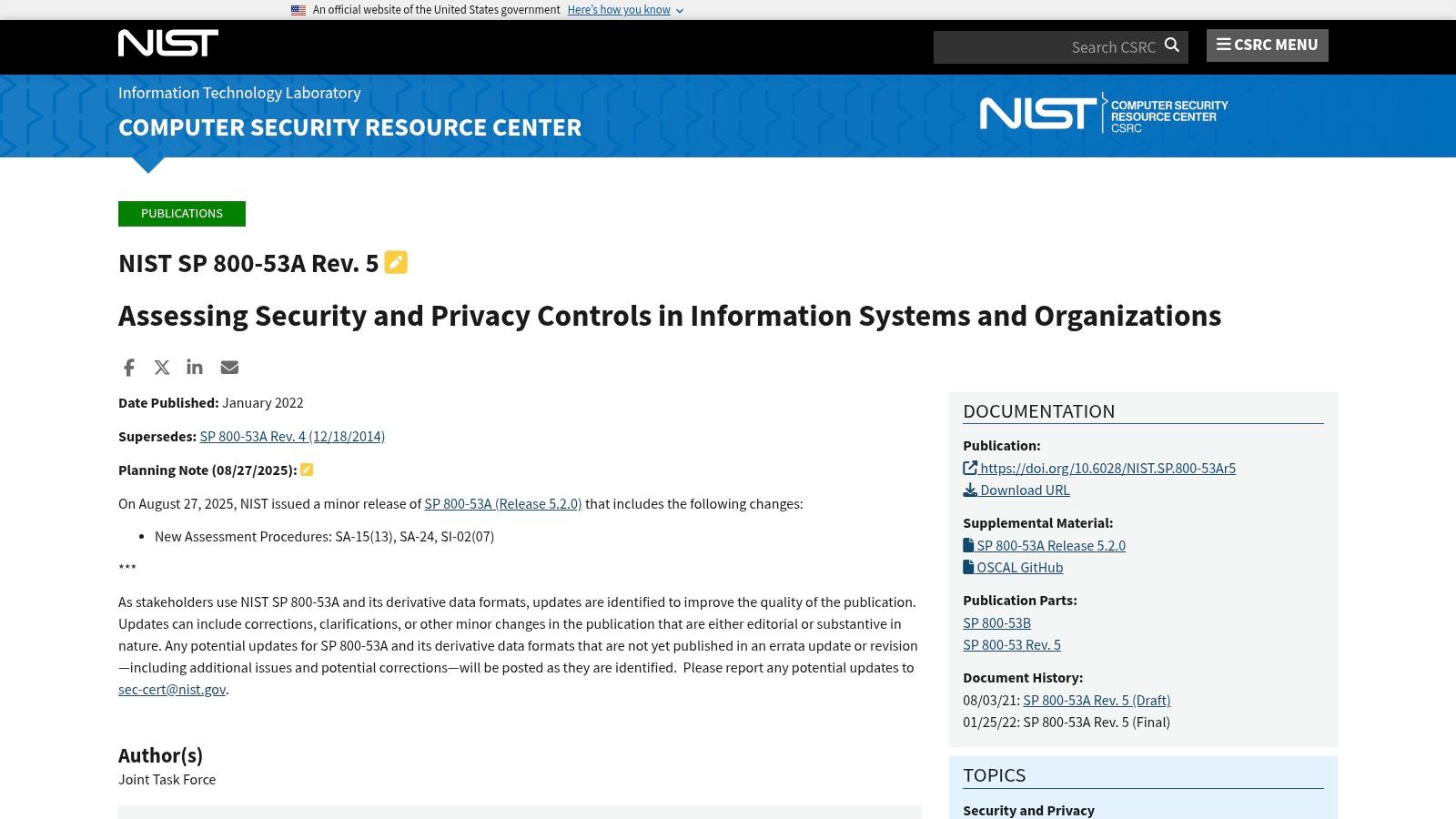
These are not simple guides; they are granular procedures used to check security controls in federal systems. By using NIST's procedures, you are lining up your audit with the source material used by countless compliance frameworks. The documents are available in PDF and CSV, making it easy to put the controls into your own tools.
This approach gives you a high level of detail and makes your audit process robust and widely recognized. It is the go-to for organizations that base their security programs on NIST frameworks.
Best Use Case: For federal contractors, organizations aligned with NIST frameworks, or any team needing a deeply detailed, defensible IT audit checklist for a formal security assessment.
Limitations: The sheer detail can be overwhelming for smaller organizations or for audits with a limited scope. These procedures often require significant tailoring to be practical for non-federal or SMB contexts without dedicated GRC tooling.
Website: https://csrc.nist.gov/pubs/sp/800/53/a/r5/final
Download Official PCI Compliance Checklists
For any business that handles credit card data, the PCI Security Standards Council (PCI SSC) is the main source. The website provides the official Self-Assessment Questionnaires (SAQs), which are the master IT audit checklists for proving PCI DSS compliance. These are the required standard for most businesses.
Unlike generic templates, each SAQ is designed for a specific payment environment. This ranges from simple e-commerce sites to complex systems with on-site servers. The PCI SSC site offers clear guidance on picking the right questionnaire, ensuring your self-assessment is accurate from the start.
These SAQs tell you "what" to do for compliance, but a penetration test validates "how" well it works. A pentest confirms your controls are functioning as intended against real-world threats and is often a requirement for PCI DSS.
Best Use Case: When you need to perform a mandatory PCI DSS self-assessment and generate an official Attestation of Compliance (AoC) for your acquiring bank or partners.
Limitations: The versioning can be confusing; always verify the current effective dates for PCI DSS v4.0 and ensure you are using the correct SAQ. This is a self-assessment tool and does not replace the need for a QSA-led audit when one is required.
Website: https://www.pcisecuritystandards.org/
Get Official Guidance For Your SOC 2 Audit
For companies going after SOC 2 compliance, the AICPA & CIMA Store is the official source for guidance. This platform provides the core documents that auditors use to conduct SOC examinations. Instead of generic templates, you get the official guide that explains the Trust Services Criteria in detail.
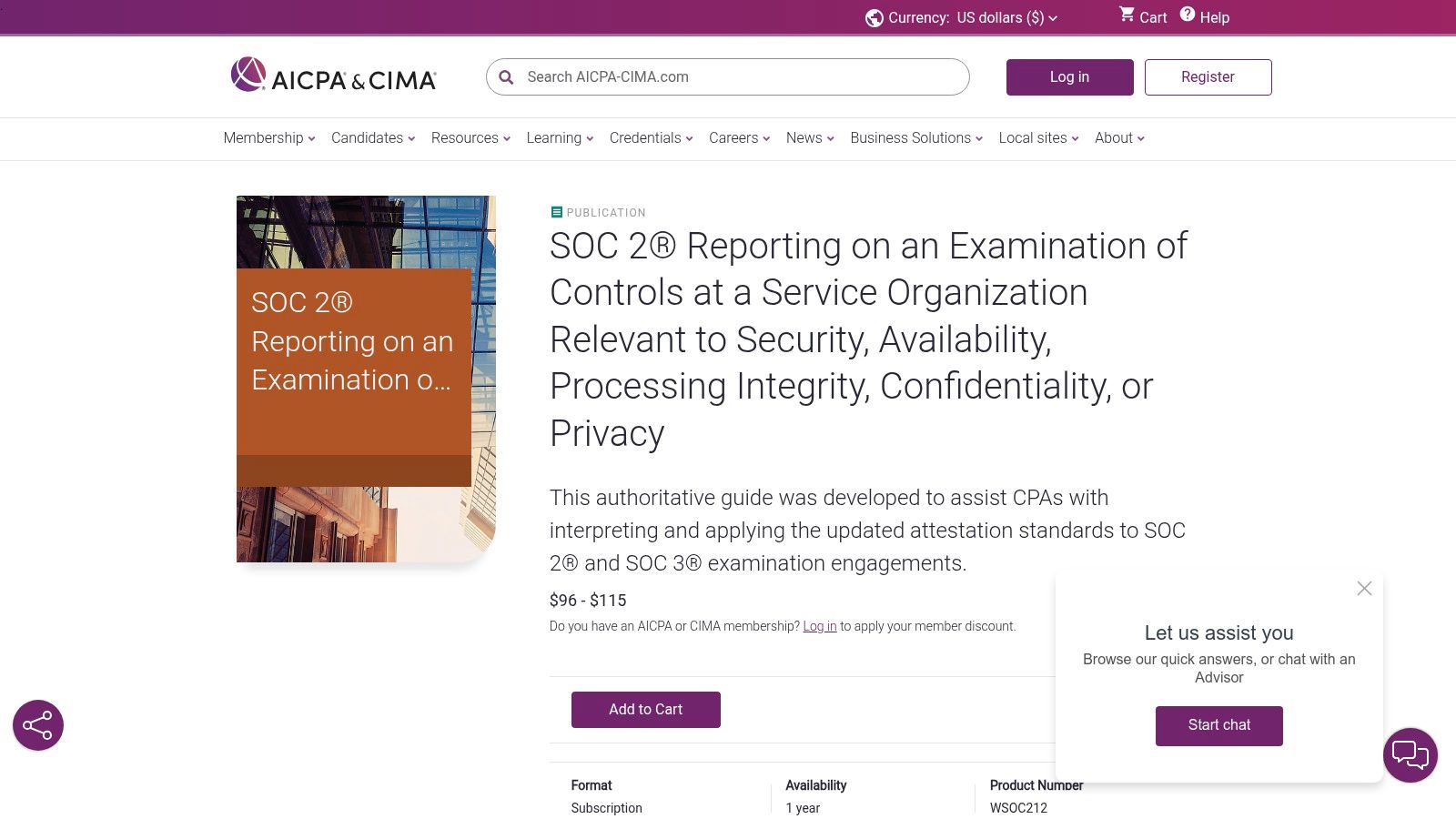
This resource is perfect for building internal checklists that are directly based on the official criteria used by CPA firms. Using this source material ensures there are no surprises between your internal prep and the external audit. It's a detailed guide, not a simple checklist, but it's essential for understanding SOC 2 controls, just like the official standard guides ISO 27001 requirements.
Best Use Case: When preparing for a SOC 2 audit and needing to create an internal controls checklist that perfectly aligns with the official Trust Services Criteria.
Limitations: The resources are paid publications, and some content requires an AICPA membership. It offers deep guidance rather than turnkey IT audit checklists, requiring you to translate the criteria into actionable test steps yourself.
Use ISO 27001 Toolkits for Fast Audits
For small and mid-sized businesses getting ISO 27001 certified, Advisera’s 27001Academy offers a big shortcut. Instead of building your audit program from scratch, this platform provides a ready-to-use documentation toolkit. It includes pre-written templates for everything from the audit checklist to the final report, which is a huge time-saver.
The main benefit here is speed. The toolkit is designed by experienced ISO auditors to cover about 80% of the paperwork you need. You can download the files, watch tutorials, and then adjust the content to fit your company. This practical approach makes the internal audit process much easier than starting with just the dense ISO standard.
Advisera's resources provide a solid baseline for ISO compliance, but remember that security is more than just paperwork. Combining these it audit checklists with real-world vulnerability testing ensures your documented controls actually work.
Best Use Case: When your team needs to quickly establish a compliant internal audit function for ISO 27001 or ISO 22301 certification without dedicating months to document creation.
Limitations: The primary limitation is its paid model, as the toolkit requires a purchase. While it provides a strong foundation, you must still invest time to customize the documents to accurately reflect your organization's unique processes and controls.
Website: https://advisera.com/27001academy/iso-27001-22301-internal-audit-documentation-toolkit/
Organize Audit Prep With Simple Templates
Smartsheet offers a great starting point for teams looking to organize their compliance work without buying special software. The platform provides a library of free, downloadable IT audit checklists focused on ISO 27001 and general cybersecurity. These are available in common formats like Word and Excel, making them easy to use.
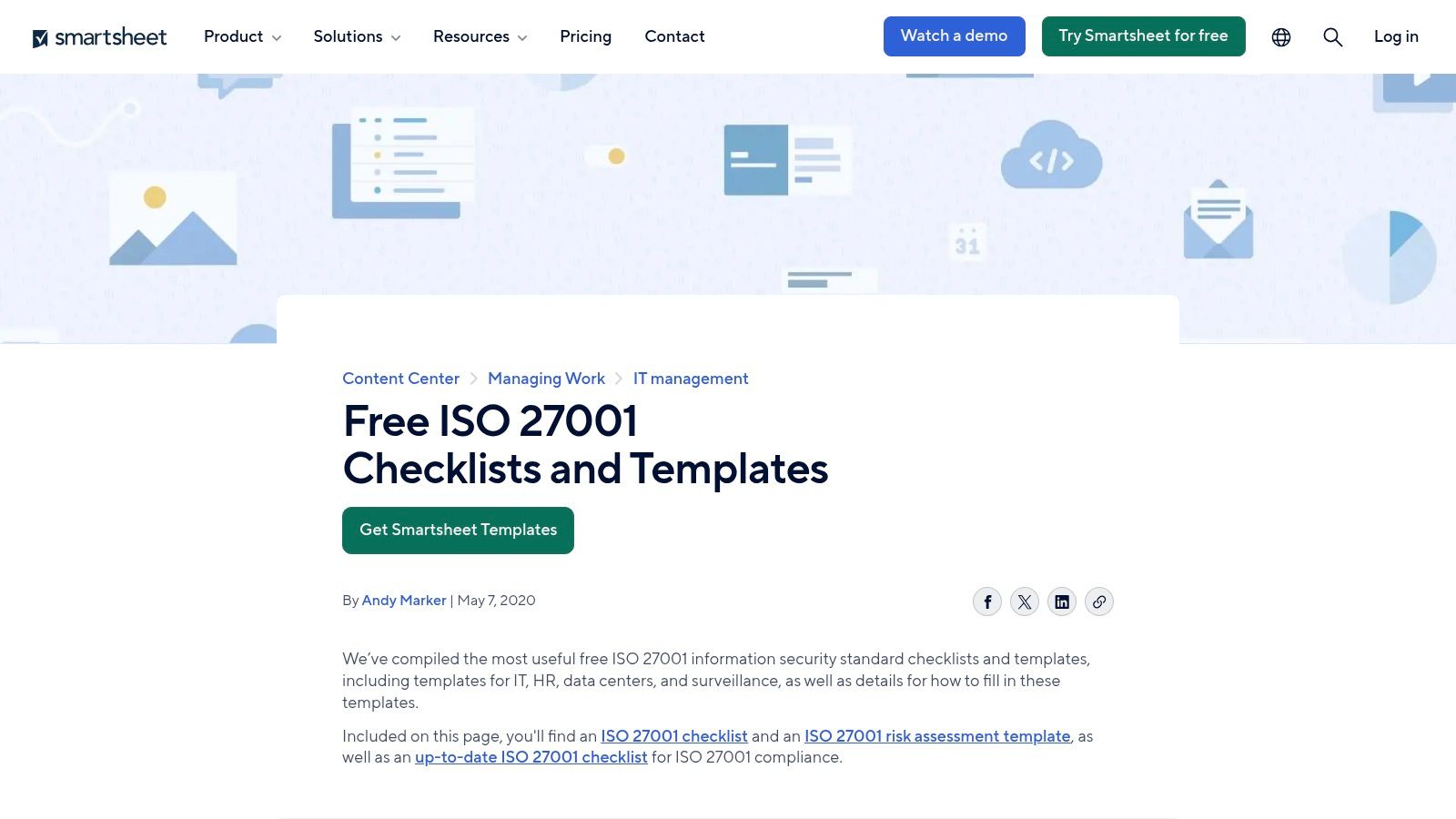
The real value here is for project management. You can use their templates to track evidence collection and assign tasks to team members. This turns a boring checklist into a tool you can actually work with. While these templates cover the basics, you will need to customize them for your own security setup.
For controls that need technical proof, understanding security testing is key. Learning what is penetration testing can show you how to check if the security measures listed in these templates really work.
Best Use Case: For teams that already use Smartsheet or need simple, free templates to organize audit preparation, evidence gathering, and task management collaboratively.
Limitations: The templates are quite generic and lack the prescriptive detail found in official framework documentation. They serve as a good organizational tool but should not be mistaken for a comprehensive GRC solution.
Website: https://www.smartsheet.com/content/iso-27001-checklist-templates
Find Templates From a Community of Auditors
For internal audit teams needing a wide range of documents, AuditNet is a long-standing community resource. This subscription-based platform offers a deep database of audit programs and templates. It covers more than just IT, including financial controls like SOX 404 and general business audits.
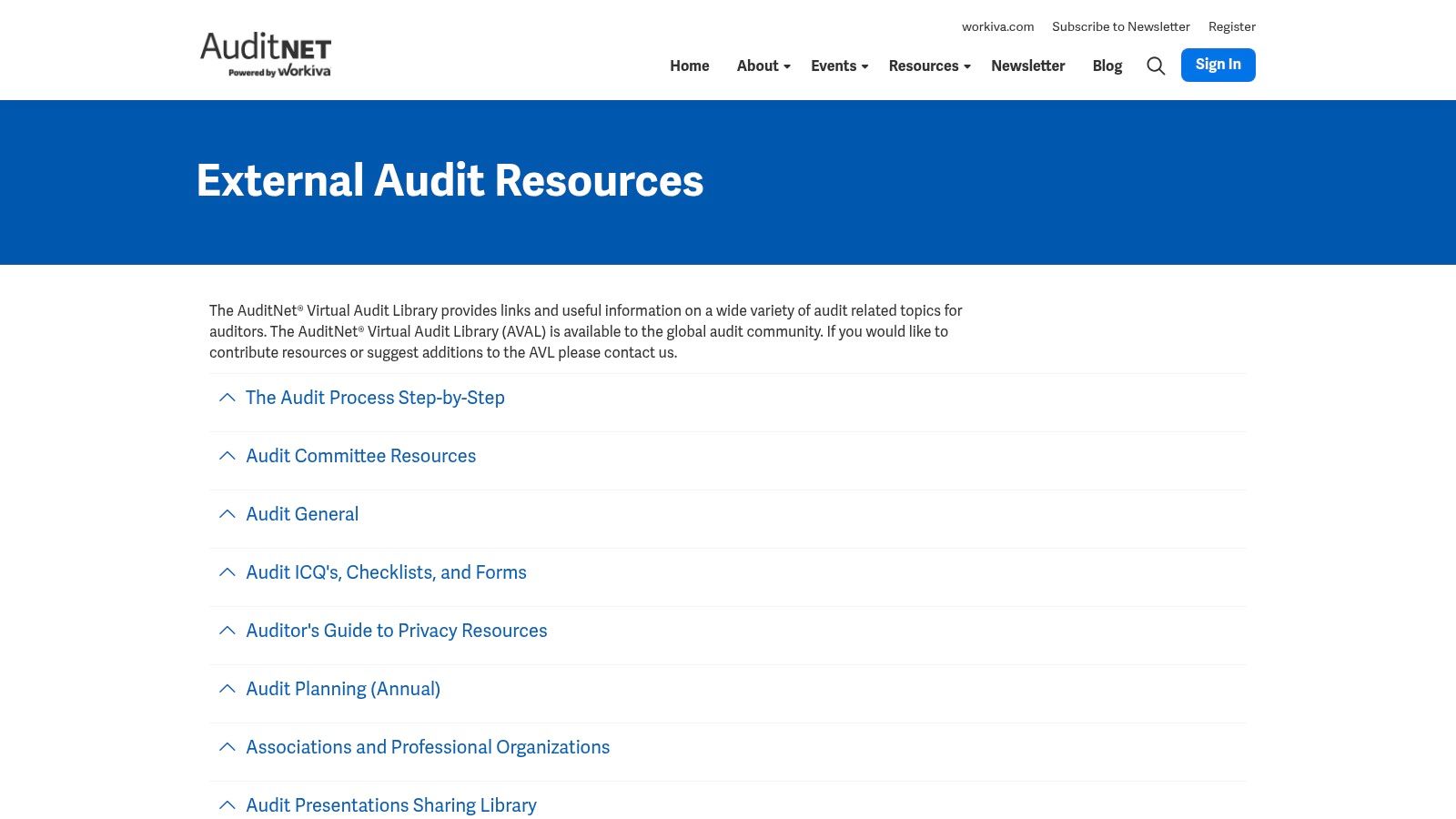
AuditNet's strength is its community-driven model. You get access to a wide variety of IT audit checklists and work programs contributed by audit professionals from different industries. This gives you unique perspectives you might not find in standard publications. It’s a useful place for auditors to see how others are handling specific challenges.
While AuditNet provides a wealth of templates, it's also important to follow key internal audit best practices to optimize your overall audit process.
.tbl-scroll{contain:inline-size;overflow-x:auto;-webkit-overflow-scrolling:touch}.tbl-scroll table{min-width:600px;width:100%;border-collapse:collapse;margin-bottom:20px}.tbl-scroll th{border:1px solid #ddd;padding:8px;text-align:left;background-color:#f2f2f2;white-space:nowrap}.tbl-scroll td{border:1px solid #ddd;padding:8px;text-align:left}Feature HighlightsPractical ConsiderationsPractitioner-Built LibraryA deep repository of real-world audit artifacts.Broad Audit CoverageIncludes IT, SOX, COSO, and operational audits.Community-DrivenContent is contributed and updated by the community.Pricing ModelRequires an annual subscription with tiered access.
Best Use Case: Internal audit departments that need a wide variety of templates covering multiple business functions, not just a single IT framework.
Limitations: The platform requires an annual subscription, and the quality of user-contributed content can vary. Its interface feels dated compared to more modern platforms.
Website: https://www.auditnet.org/communities/external-resources
Get Checklists Mapped to CIS Controls
For organizations focused on cybersecurity controls, the Cybersecurity Risk Foundation (CRF) offers a very practical set of resources. The platform provides IT audit checklists that are directly mapped to frameworks like the CIS Controls. These are not generic lists but tools designed for hands-on security assessments.
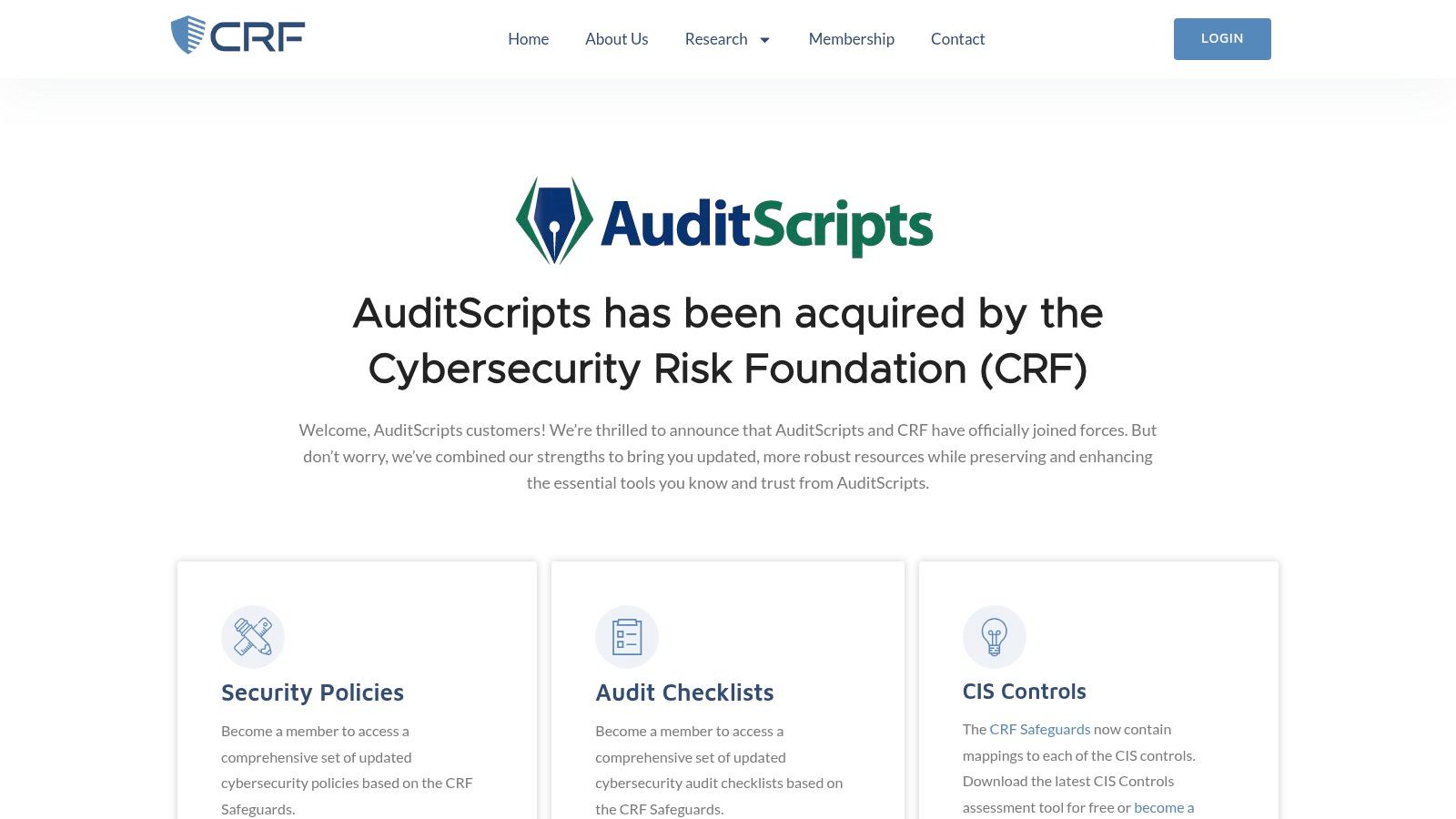
CRF's key advantage is its focus on detailed controls and mapping across different frameworks. Instead of managing separate checklists for different standards, you can use their Excel tools to see how one control meets requirements across multiple frameworks. This speeds up compliance work and simplifies collecting evidence.
A strong internal audit checklist is fundamental. But adding proactive security testing can find vulnerabilities before they become audit problems.
Best Use Case: When you need a control-focused cybersecurity audit checklist with mappings to other standards to streamline multi-framework compliance.
Limitations: Full access to the extensive library requires a paid membership. The branding transition from AuditScripts to CRF might cause some confusion when searching for legacy resources or links.
Website: https://crfsecure.org/auditscripts/
Turn Your Checklists Into Real Security
Having the right it audit checklists is a great first step. They give you a roadmap for getting organized for audits like SOC 2, ISO 27001, and PCI DSS. But a checklist is just a piece of paper. The goal isn't just to have security controls, but to prove they actually work.
This is where you move from saying you have a firewall to actively testing if it can be bypassed. To make your security program real, consider how secure automation in data acquisition can make your evidence collection more accurate and efficient. This is how you build a culture of security, not just compliance.
Here are your next steps:
- Prioritize: Start with the framework that matters most to your business. If you're a SaaS company, that's probably SOC 2. If you handle credit card data, it's PCI DSS. Use the checklists to find your biggest risks and fix those first.
- Assign Owners: Every control on your checklist needs someone responsible for it. Without clear ownership, things get missed, and you'll be scrambling right before the audit.
- Test Your Controls: This is the most important part. You can't just assume a control is working. Regular internal testing and independent validation are essential. This is where a penetration test is a must-have.
Having the right it audit checklists is a huge step, but the ultimate goal is to prove your controls actually work. That's where penetration testing comes in. A pentest is like a final exam for your security, showing you exactly where vulnerabilities exist before an auditor—or an attacker—finds them. Traditional pentesting is often slow and expensive, which just doesn't work for fast-moving teams.
We do things differently. Our team of certified pentesters (OSCP, CEH, CREST) delivers affordable, high-quality pentests with reports back to you in under a week. We provide the clear, actionable findings you need to fix critical issues and satisfy auditors for SOC 2, PCI DSS, and ISO 27001. You've built your security program with the best checklists; now it's time to put it to the test.
Ready to validate your security controls and prove your defenses work? At Affordable Pentesting, we turn your completed IT audit checklists into auditor-ready proof. Get fast, affordable, and expert-led penetration testing to find and fix vulnerabilities before they become a problem.