.svg)
A vulnerability management procedure is your simple game plan for finding and fixing security holes. Think of it as a checklist that stops tiny cracks from becoming giant, expensive data breaches. Having this documented is critical for passing audits like SOC 2 or PCI DSS and proving you take security seriously.
Your Practical Vulnerability Management Procedure
Feeling overwhelmed by security alerts and high pentesting quotes? We get it. Many IT managers and startup founders are frustrated with traditional firms that are slow, expensive, and don't find much. We offer a fast, affordable alternative.
Our approach is simple: we provide expert, manual penetration tests that give you real results, fast. Our OSCP, CEH, and CREST certified pentesters find what automated tools miss. You get an actionable report in about a week, all at a price that won't break your budget.
Why Your Business Needs This Procedure
Let's be blunt. Attackers move at lightning speed, and unpatched software is one of their favorite ways to get in. A formal vulnerability management procedure isn't just a "nice-to-have" for a compliance checklist; it's a core defense for your business.
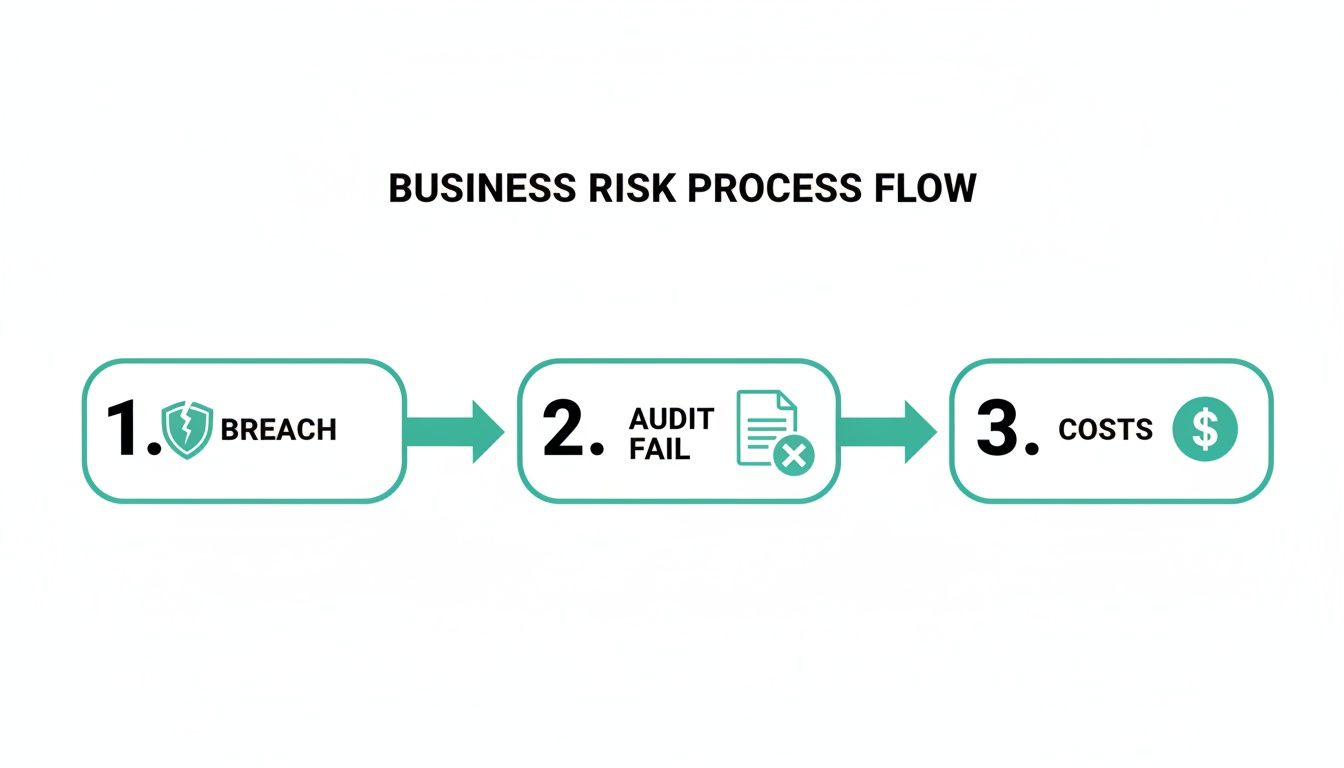
Without a solid plan, you risk failing SOC 2 or PCI DSS audits, losing customer trust after a breach, and facing crippling recovery costs. A simple, repeatable process is one of the smartest investments you can make. This is a key part of any good security program and fits within the larger context of essential cyber security risk management strategies.
The Real-World Risks of Doing Nothing
Ignoring vulnerabilities is like ignoring a leaky roof. At first, it’s a small drip. Before you know it, you're dealing with major damage. A newly announced vulnerability can be turned into an automated attack within hours.
The threat is constant. According to recent statistics, 69% of exploits required no user interaction at all. This constant flood of new threats makes a structured vulnerability management procedure essential for survival.
Protecting Your Bottom Line and Reputation
Failing to manage vulnerabilities hits your business from multiple angles, and they all lead back to money and trust. Let's break down the real costs of inaction.
Failed audits can mean losing huge contracts or facing steep fines. The cost of cleaning up after a breach is always way higher than the cost of preventing it. And a single security incident can wipe out years of trust you’ve built with your customers.
How We Make Proactive Security Affordable
Many small businesses think a robust security program is out of reach. Traditional pentesting firms are slow, expensive, and often deliver reports that find very little. We believe effective security should be accessible to everyone.
Our whole approach is built around making high-quality, manual penetration testing fast and affordable. Our pentesters hold top certifications like OSCP, CEH, and CREST. For a deeper dive into effective strategies, check out our guide on vulnerability management best practices.
Creating Your Vulnerability Management Framework
Alright, let's get into the nuts and bolts of your vulnerability management procedure. This framework turns your security goals into a simple, repeatable process. It has to be lean, practical, and focused on fixing what actually matters.
It all starts with a simple rule: you can’t protect what you don’t know you have. Your first step is to make a list of all your digital assets. This includes hardware, software, and any cloud services your business uses.
Choose Scanning Tools and Set a Schedule
Once you know what you have, it's time to start looking for weaknesses with vulnerability scanning. You don't need the most expensive tool on the market. Just pick one that gives you clear results.
What's really important is setting a consistent scanning schedule. A great starting point is scanning all your external-facing systems weekly and your internal ones monthly. This keeps you on top of new threats without creating alert fatigue.
Prioritize Vulnerabilities Based on Real Risk
Pay attention, because this is the most important part. You will find more vulnerabilities than you can ever hope to fix. If you don't prioritize, you'll drown. A critical vulnerability on a test server is less urgent than a medium one on your customer database.
Context is everything. You need to weigh business impact, exploitability, and exposure for every vulnerability. This risk-based approach ensures your team's limited time is spent on flaws that pose a genuine threat. This strategic focus is the cornerstone of an effective cybersecurity risk management framework.
Assigning Fixes and Setting Deadlines
Finding security flaws is one thing. Actually fixing them is where the real work begins. A solid remediation workflow needs to be simple and repeatable.
Once you’ve prioritized a vulnerability, it needs an owner and a deadline. A simple policy might look like this: patch critical vulnerabilities within 7 days, high within 30 days, and medium within 90 days. This structure builds accountability and makes your vulnerability management procedure predictable.
Managing Exceptions and Compensating Controls
Let's be realistic: sometimes a direct fix isn't possible. Maybe a patch will break a critical application. You can’t just ignore the risk.
This is where you formally document why a patch can’t be applied and what compensating controls you’re putting in place instead. For example, you might move a vulnerable server to an isolated network. The most important part is documenting these decisions for auditors.
The Most Important Step Verifying the Fix
How do you know a vulnerability is really gone? You have to verify it. This is the most frequently skipped step in any vulnerability management procedure.
Running another automated scan is a good first check, but it’s not enough. The only way to be certain is to have a human try to break it again. This is where an affordable remediation pentest provides crucial assurance.
Validating Your Process with Penetration Testing

Automated scanners are like security guards who only check for unlocked doors. They are essential, but they can't spot a clever thief who knows how to pick a lock. This is why manual penetration testing is a non-negotiable part of a mature vulnerability management procedure.
Our ethical hackers think like real attackers, finding complex flaws that automated tools are blind to. This isn't just about ticking a compliance box; it's about finding the hidden risks that lead to a breach. A deeper look at how these approaches differ is in our article about penetration testing vs. vulnerability assessment.
The Affordable Alternative to Slow Expensive Firms
We know why many startups skip manual pentesting: traditional firms are painfully slow and incredibly expensive. They charge enterprise prices and take weeks to deliver a report. We built our service to be the exact opposite.
Our team holds top industry certifications like OSCP, CEH, and CREST. You get a clear, actionable report within a week. And we do it all at a price that makes sense for your budget.
Closing the Loop on Your Security Procedure
Penetration testing is the final validation step that proves your entire vulnerability management procedure is working. It’s the independent verification showing your patching and remediation efforts have successfully closed the gaps that matter.
This validation is more critical than ever, with public-facing application exploits being a major entry point for attackers. To understand the scale of these threats, discover more insights about threat intelligence trends on cloud.google.com. Don't let a hidden vulnerability undermine your hard work. Reach out through our contact form to see how quickly we can help.
How to Measure and Report Your Success
A vulnerability management program is useless if you can't prove it's working. You need simple, clear metrics to show leadership and auditors that your hard work is paying off. This is about tracking a few key numbers that tell a powerful story.
When an auditor asks how you manage risk, a clean dashboard showing positive trends is a much better answer. This data is what you need to justify security investments and demonstrate continuous improvement for frameworks like SOC 2 and ISO 27001.
Key Metrics for Your Dashboard
Let's keep this simple. Focus on a handful of metrics that directly measure how effective your process is. Stick to numbers that drive action and show you're reducing real risk.
Good metrics to track include your Mean Time to Remediate (MTTR), the age of your open vulnerabilities, your scan coverage percentage, and the number of open critical or high vulnerabilities. The goal is to watch these numbers consistently trend downward over time.
Creating a Simple and Effective Report
You don't need a fancy tool for this. A basic spreadsheet can get the job done. The goal is to create a one-page view that anyone can understand at a glance.
Tracking your metrics gives you a powerful, data-driven story to tell. It moves the conversation from "we think we're secure" to "here's the data that proves we're getting more secure." For more on this, check out these actionable audit trail best practices.
Using Reports to Prove Compliance to Auditors
For frameworks like SOC 2, auditors live for this kind of data. They want to see evidence of a living, breathing vulnerability management procedure. Your reports provide the concrete proof they need.
This is also where validation from an affordable manual pentest becomes so valuable. Our reports, delivered within a week, give you an independent, expert assessment. Our OSCP, CEH, and CREST certified pentesters provide the human-led verification that automated tools miss, giving you confidence that your metrics reflect true risk reduction.
Frequently Asked Questions
What's the Difference Between Vulnerability Management and Penetration Testing?
Think of it like this: vulnerability management is your building's regular security patrol. It uses automated scanners to constantly check for unlocked doors. A penetration test is when you hire our experts to actively try and break into your building to find weaknesses a routine patrol would miss.
How Often Should We Run Vulnerability Scans?
A good starting point is to scan all your external, internet-facing systems at least weekly. For your internal network, scanning monthly is generally enough. This cadence is a core part of a strong vulnerability management procedure.
What if We Can't Patch a Vulnerability Immediately?
It happens. Sometimes a patch might break a critical application. In these cases, you formally document the risk and implement a compensating control, like a strict firewall rule. Auditors love seeing this kind of documentation.
Why Do We Need a Manual Pentest if We Already Scan?
Automated scanners are fantastic at finding known issues, but they have major blind spots. They can't find the complex, multi-step attacks that a creative human attacker would use. Our affordable manual pentests, with reports delivered in about a week, find the critical risks scanners always miss.
Ready to prove your vulnerability management procedure is truly effective? Affordable Pentesting provides the fast, expert-led validation you need without the enterprise price tag. Get actionable reports from certified ethical hackers in about a week. Fill out our contact form for a quote at https://www.affordablepentesting.com.