.svg)
What are you buying when you search for the best penetration testing company? For most startups and SMBs, the answer should be simple. A manual test that finds real issues, supports SOC 2, PCI DSS, HIPAA, or ISO 27001, and gets the report back fast enough to keep the audit or release moving.
Too many firms sell pentesting like a large consulting engagement. You get long scoping calls, slow scheduling, add-on fees, and a report that shows up weeks after the work stopped being urgent. That model fits big enterprises with big budgets. It is a poor fit for lean teams that need a credible test this month, not a procurement exercise.
Buyers have more options now, and that matters.
The decision is not brand prestige. It is whether the provider can deliver skilled manual testing, a clear scope, and an auditor-friendly report without wasting time or inflating cost. If you need a quick refresher before comparing vendors, this short guide on what penetration testing is and how it works covers the basics.
This guide is built for the buyer who cares about speed, price, and test quality. I am not giving extra credit for the biggest sales team or the flashiest platform. I care about whether a firm is practical for startups and mid-market teams, whether it handles common compliance use cases well, and whether it can deliver useful results in days instead of dragging the process out for a month.
Start with the fundamentals. Clear scoping. Manual testing by qualified people. Findings written in plain English. Remediation guidance your engineers can act on. A report your auditor will accept.
That is what a good pentest partner should deliver.
Affordable Pentesting

If your main goal is getting a solid manual penetration test without paying enterprise rates, start with Affordable Pentesting. This is the most practical option on this list for startups, SMBs, and teams trying to hit compliance deadlines without turning a pen test into a procurement project.
The positioning is clear. Affordable Pentesting focuses on affordable penetration testing for SOC 2, PCI DSS, HIPAA, and ISO 27001 use cases, especially for companies with web applications. That matters because a lot of buyers don’t need a global consulting giant. They need competent testers, clear findings, and a report that auditors will accept.
Why it fits smaller teams
Affordable Pentesting is built around the needs that smaller organizations have. Fast-moving teams need a penetration test partner that understands common web app risks, can explain findings in plain English, and won’t bury them in process.
The company says it uses certified ethical hackers and offers manual pentesting services. That’s the right direction if you’re tired of scanner-heavy work dressed up as a real engagement. If you need a basic primer before buying, their explainer on what penetration testing is is a useful starting point.
What I like most is the focus. This isn’t trying to be everything for every multinational. It’s aimed at the buyer who needs to secure an app, satisfy a customer security questionnaire, or get through a compliance review without wasting time.
Practical rule: If your environment is mostly web apps, APIs, and standard cloud infrastructure, a focused boutique provider is often a better buy than an enterprise firm.
What to verify before you sign
There are trade-offs. Pricing isn’t published publicly, so you’ll need to use the contact form and get a quote. There also isn’t a deep library of public proof points, customer stories, or public-facing audit credentials listed in the provided materials, so serious buyers should ask direct questions.
Ask for these before you commit:
- Sample report: Make sure the writing is clear, the risk ranking makes sense, and remediation steps are useful.
- Tester credentials: Confirm who’s doing the work and whether the assigned testers hold certifications such as OSCP, CEH, or CREST.
- Scope details: Verify exactly what’s included, including web apps, APIs, authentication flows, and cloud assets.
- Retest terms: Ask whether retesting is included and how quickly they can validate fixes.
- Timeline commitment: If speed matters, ask for a written delivery commitment.
This is the right kind of vendor for a startup founder, IT manager, or compliance lead who wants a pen test that’s affordable and straightforward. It’s also a smart fit if you’re frustrated by firms that oversell “research-driven” testing but can’t explain what you’ll receive.
Bottom line on value
Affordable Pentesting stands out by focusing on the core needs of most buyers. Affordable manual testing, compliance alignment, and web app focus are stronger advantages for SMBs than a flashy platform with a long contract.
If you’re comparing vendors and trying to avoid overpaying, read their breakdown of the cost of penetration testing before talking to larger firms. It’ll help you spot when a quote is built around real scope versus enterprise overhead.
For startups and SMBs, this is the strongest first call on the list.
Bishop Fox

Bishop Fox is a serious option if you want deep manual penetration testing and you’ve got the budget to support it. This is not the cheap pick. It’s the premium pick for teams that want a known offensive security brand and broader ongoing coverage through its Cosmos platform.
The firm is well known for application, cloud, network, mobile, and red team work. For larger organizations, that range is useful because one vendor can cover multiple testing needs without a lot of handoffs.
Where Bishop Fox is strongest
The big draw here is depth plus continuity. Cosmos gives organizations ongoing visibility into exposed assets and remediation work between traditional penetration tests. If your team needs more than a single point-in-time report, that model is appealing.
This is the kind of provider I’d recommend to a company that already has some internal security maturity. If you’ve got engineers who can work through findings fast and you want a partner that can support repeated testing over time, Bishop Fox makes sense.
- Manual depth: Better fit for buyers who care more about expert-led testing than cheap automation.
- Broader scope support: Useful if your program spans apps, cloud, mobile, and external attack surface review.
- Executive-ready reporting: Better choice when findings need to work for both engineers and leadership.
The downside is predictable. It’s enterprise-oriented, quote-based, and likely too heavyweight for small one-off scopes.
Cost and buying process trade-off
If you’re a startup looking for a fast, affordable pen test, Bishop Fox may be more than you need. Bigger firms often bring stronger process, but they also bring more layers, longer scheduling windows, and higher pricing.
That doesn’t make it a bad option. It just means you should only buy this level of service if you’ll use it. If your current need is a straightforward compliance-driven assessment, a simpler provider may get you there faster.
For teams still sorting out scope, it helps to understand the main penetration testing types before taking sales calls. That keeps you from paying for a red-team-style engagement when you really needed a web app pen test.
Bishop Fox is best when you want depth and continuity, not when you just want the cheapest path to a clean compliance deliverable.
Go with Bishop Fox if you want a premium offensive security partner and you can tolerate premium pricing. Skip it if affordability is your top filter.
NCC Group US
NCC Group is a strong choice for regulated companies that need scale, structure, and broad service coverage. If you’re operating across multiple products, regions, or business units, this kind of large consultancy can handle complexity that smaller shops may struggle with.
It’s especially relevant if your buyers, auditors, or enterprise customers already recognize the name. That kind of market trust can make vendor approval easier.
Best fit for complex programs
NCC Group is a CREST-member organization and is known for human-led testing supported by tooling. That combination usually works well for companies that want mature delivery and formal assurance documentation, not just a list of bugs.
This isn’t the provider I’d point a seed-stage startup toward first. It is a good fit for a company that has grown beyond one app and now needs repeatable security testing across a wider estate.
A few practical reasons buyers choose NCC Group:
- Program scale: Better suited to multi-region or multi-team engagements.
- Compliance alignment: Helpful when testing has to support formal assurance processes.
- Established methodology: Good fit for teams that want a documented, consistent delivery model.
What smaller buyers should watch
The trade-off is speed and weight. Enterprise firms tend to be more process-heavy, and that can slow down scoping or scheduling when you need a quick penetration test.
That doesn’t mean the work is slow. It means the overall buying cycle often is. For lean teams, that friction matters.
NCC Group is best when internal stakeholders expect a recognized global brand and when your environment is too broad for a boutique provider. If your needs are simpler, there’s a good chance you’ll get comparable practical value from a more focused vendor at a lower cost.
NetSPI
Need a penetration testing partner that can handle repeat audits without turning every engagement into an email chase? NetSPI is a strong pick for teams that want a PTaaS workflow instead of a one-time PDF and a long follow-up thread.
Its value is operational. NetSPI gives security teams a central place to review findings, track remediation, and coordinate retests across multiple applications or business units. That matters once you are past the single-app stage and dealing with recurring SOC 2, PCI, or HIPAA testing.
Where NetSPI fits best
NetSPI makes the most sense for companies that already have some security process in place and need testing to run on a schedule. If your team is managing several assets, repeated compliance deadlines, or multiple stakeholders, the platform approach saves time and reduces handoff friction.
You also get better continuity than you do from a static report-only engagement.
That does not automatically make NetSPI the right choice for a startup buying its first pentest. Early-stage teams usually care more about speed, direct tester access, and a report they can hand to an auditor within days. A larger PTaaS model can be useful, but it can also be more system than you need.
The trade-off
The upside is coordination. The trade-off is simplicity.
NetSPI is built for ongoing programs, not just one fast manual assessment at the lowest practical cost. If you want a single web app test with a quick turnaround and clear pricing, a smaller specialist will often be the better buy. If you expect repeated testing, retests, and internal reporting across teams, NetSPI starts to look more cost-effective over time.
It is also quote-based, so expect a sales process rather than self-serve pricing.
Buyer signal: Choose NetSPI if you need a repeatable testing process for multiple assets and compliance cycles. Skip it if your main goal is getting one affordable manual pentest completed this week.
For SMBs, that is the key distinction. NetSPI is a better fit for building a testing program than for solving a one-off compliance deadline as cheaply and quickly as possible.
Synack
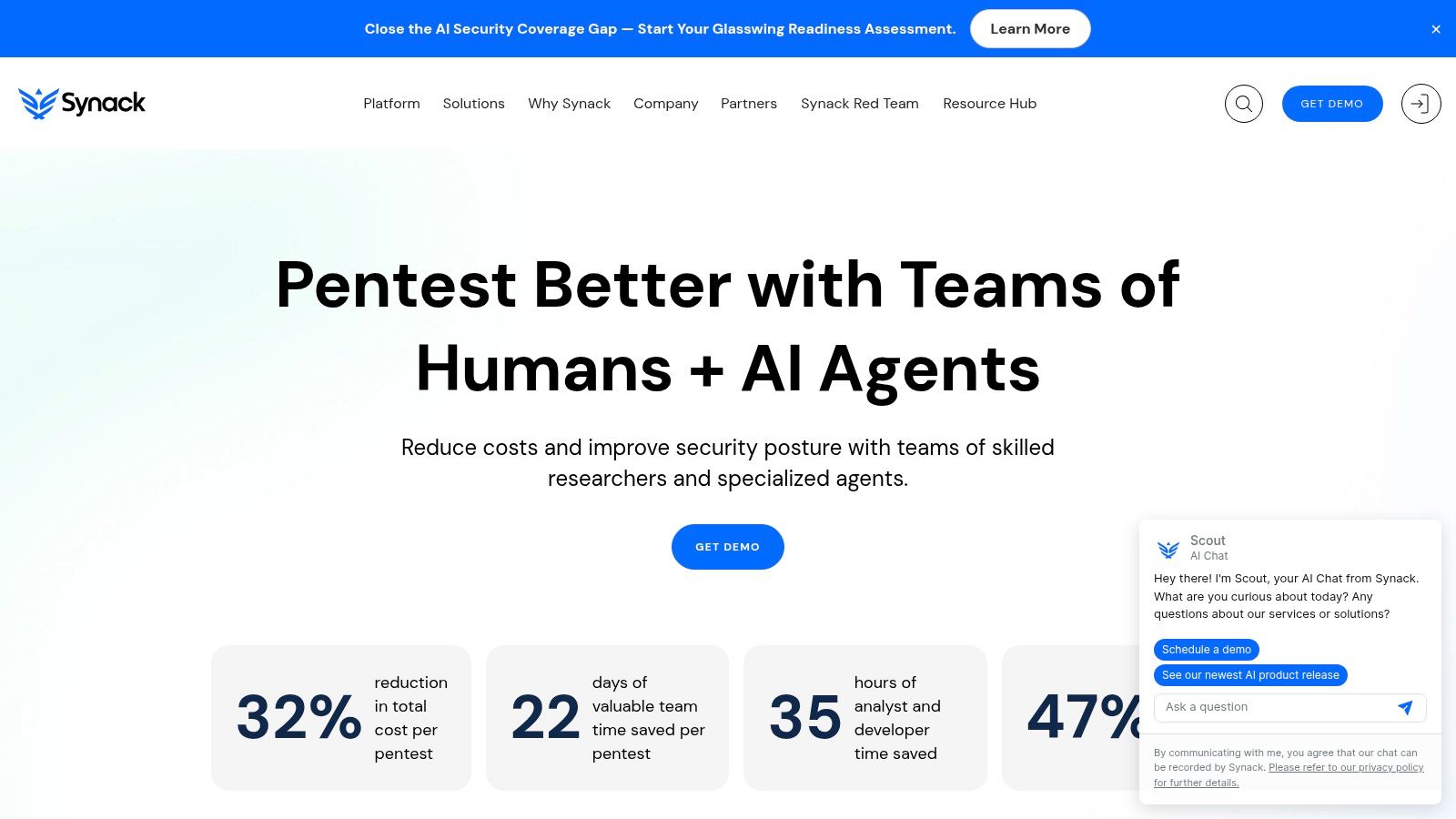
Synack takes a different route. Instead of the classic consultancy model, it uses a platform backed by a vetted researcher community. That makes it attractive for companies that want fast mobilization, broad skill coverage, and ongoing testing options.
If your release cycle is fast, this model can work well. You can line up testing without waiting on the same kind of consultant scheduling bottleneck that slows traditional firms.
Speed and coverage benefits
The main reason to buy Synack is flexibility. The platform model gives security teams visibility into testing activity and findings as the engagement moves forward, which is useful when you’re trying to keep engineering, product, and compliance teams aligned.
This also helps in audit conversations. Buyers often want proof of what was tested, by whom, and when. A platform with built-in telemetry makes that easier to explain.
There’s also a broader affordability discussion happening in the market. One analysis highlights a gap in pricing transparency for SMBs and notes that many top-ranked firms still focus heavily on enterprise-style manual testing and less on practical budget fit for smaller teams, as discussed in this industry roundup on penetration testing companies. Synack isn’t a budget vendor, but its operating model at least addresses speed and access in a way some traditional firms don’t.
When to skip Synack
If you have a very niche environment or you want one senior consultant fully embedded in your project from start to finish, Synack may not feel as customized as a boutique shop. Crowd-backed models are strong at scale, but they aren’t always the most personal.
Use Synack when speed, coverage variety, and testing telemetry matter more than a boutique relationship. Skip it if you want the feel of a small dedicated team that knows your app inside and out.
Praetorian
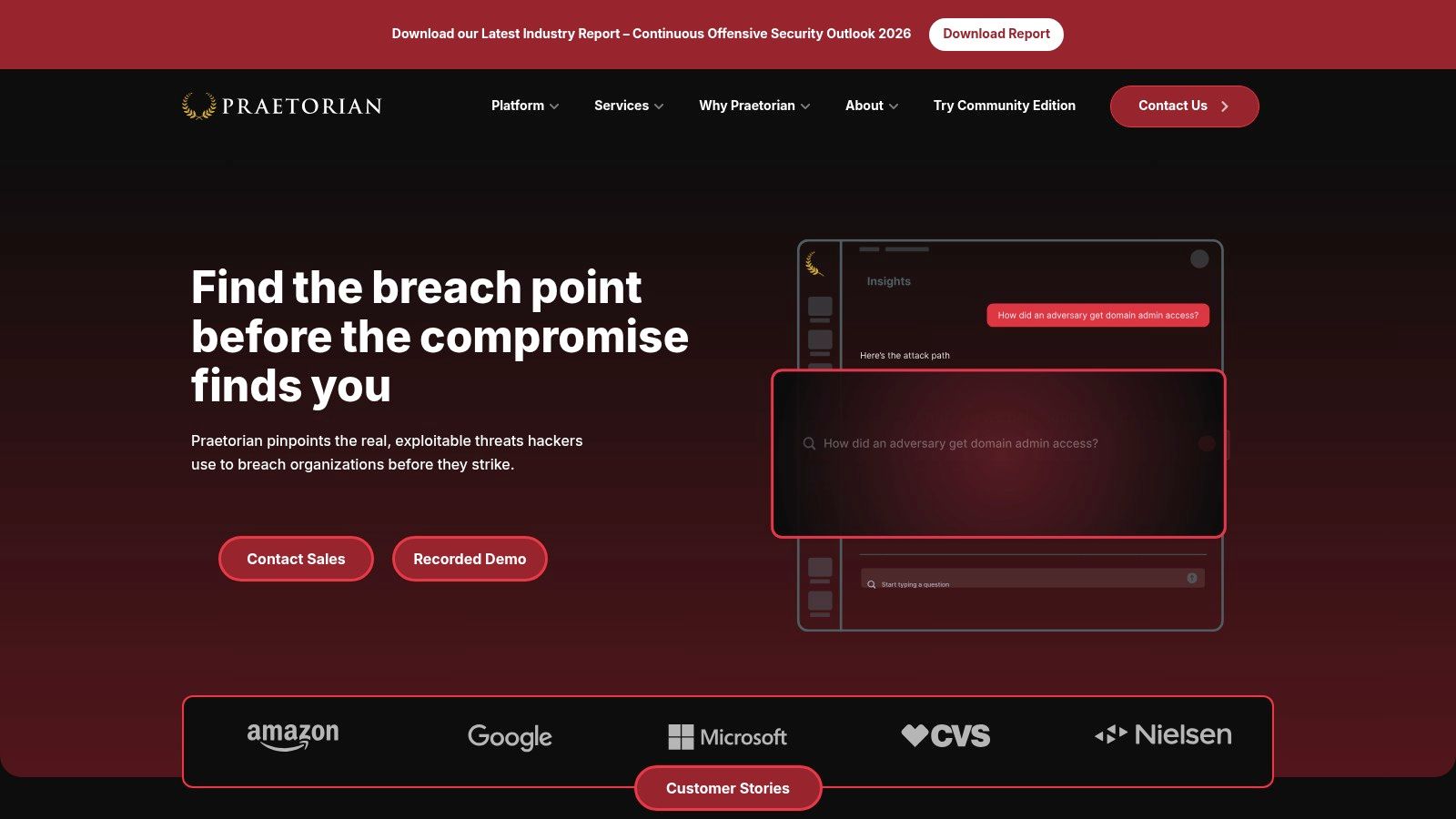
Praetorian is the pick for cloud-heavy environments that have gotten complicated. If your AWS, Azure, or GCP setup includes identity sprawl, service integrations, and modern application patterns that create messy attack paths, this firm is worth a look.
A basic web app pen test and a cloud attack-path review are not the same thing. Praetorian is better for the second problem.
Best for cloud and identity depth
Praetorian has a reputation for technical depth in cloud and IAM-heavy scenarios. That matters because many real breaches don’t come from one obvious app bug. They come from chained issues across permissions, services, and weak assumptions between systems.
If your team needs someone to think like an attacker across that chain, Praetorian is stronger than a low-cost compliance shop. It also offers both point-in-time testing and a more continuous managed model, which gives larger teams room to expand the relationship.
- Cloud-first testing: Better fit for buyers with meaningful cloud complexity.
- Modern stack support: Useful for APIs, microservices, and integrated services.
- Continuous option: Good if you want more than annual testing.
Why smaller teams may pass
For a small startup with one product and a narrow scope, Praetorian may be overkill. You can absolutely buy too much pentesting.
That’s the main caution here. Deep expertise is valuable, but only if your environment justifies it. If your current need is passing a compliance requirement for a standard web platform, a more affordable vendor will probably get you to the finish line with less friction.
Coalfire

Need a pentest that will survive auditor scrutiny without a long fight over report format and control mapping? Coalfire is one of the safer picks.
Its strength is compliance execution. If your pentest sits inside a PCI DSS review, FedRAMP workflow, SOC 2 program, or healthcare assessment, Coalfire brings the process discipline those projects demand. That matters because a technically strong test can still create delays if the final report does not match what auditors, assessors, or internal compliance teams need.
Why compliance teams pick Coalfire
Coalfire Labs benefits from the firm’s GRC background, and that shows up in the deliverables. The value here is not flashy offensive work. It is clean documentation, control-aware reporting, and a testing approach that fits regulated environments.
That makes Coalfire a solid option for payments, fintech, federal, and healthcare buyers. If your security lead and your compliance manager both need to sign off, Coalfire is easier to justify than a pure boutique testing shop that only focuses on technical depth.
For startups and SMBs, the question is simpler. Are you buying a pentest to satisfy an audit with minimal back-and-forth, or are you buying the fastest manual test at the lowest practical cost? Coalfire fits the first case better than the second.
Where the trade-off shows up
You will usually pay for that audit alignment in speed and process overhead. Coalfire makes more sense when documentation quality is part of the purchase decision, not just the test itself.
If you need a manual pentest next week for a standard web app, this is probably not the most efficient path. A smaller, compliance-aware vendor can often move faster and cost less. If your scope is tied to regulated controls and your team wants fewer reporting issues later, Coalfire earns its place on the shortlist.
Ask this early: will the report drop cleanly into our audit process, or will our team spend another two weeks translating technical findings into compliance evidence?
Choose Coalfire for audit-heavy engagements. If your main goal is fast turnaround and startup-friendly pricing, look elsewhere.
Top 7 Penetration Testing Companies Comparison
| Provider | Implementation complexity 🔄 | Resource requirements & speed ⚡ | Expected outcomes 📊 | Ideal use cases 💡 | Key advantages ⭐ |
|---|---|---|---|---|---|
| Affordable Pentesting | Low–Medium 🔄, straightforward web/app scopes | Low resources; budget-focused; quote-based turnaround ⚡ | Actionable vulnerability findings; compliance readiness support 📊 | Startups & SMBs needing SOC 2/PCI/HIPAA web-app tests 💡 | Cost-conscious, SMB-focused testing with certified testers ⭐ |
| Bishop Fox | High 🔄, deep manual testing & red teaming | High resources; premium pricing; longer lead times ⚡ | Thorough, prioritized findings and stakeholder-friendly reports 📊 | Enterprises wanting continuous external coverage and red teams 💡 | Senior talent, strong brand, Cosmos continuous testing ⭐ |
| NCC Group (US) | High 🔄, program-level and multi-region engagements | Large-scale resourcing; can scale for urgent work but process-heavy ⚡ | Comprehensive assurance, compliance artifacts and broad coverage 📊 | Regulated industries and large portfolios needing scale 💡 | Global reach, mature methodologies and certified consultants ⭐ |
| NetSPI | Medium 🔄, PTaaS platform with human-led testing | Platform-centric; efficient for many assets; speeds remediation ⚡ | Real-time findings, retest orchestration and consolidated reporting 📊 | Programs with many applications, repeatable workflows, compliance teams 💡 | PTaaS workflow with year-long access and consolidated dashboards ⭐ |
| Synack | Low–Medium 🔄, crowdsourced, platform-controlled testing | Fast mobilization; large vetted researcher pool; on-demand scaling ⚡ | Measurable coverage, telemetry and rapid scheduling for audits 📊 | Agile release teams needing rapid scheduling and coverage metrics 💡 | Crowdsourced scale with coverage analytics and platform controls ⭐ |
| Praetorian | High 🔄, cloud-first, identity-heavy attack path testing | Significant engineering resources; quote-based; technical depth ⚡ | Deep cloud/IAM findings; option for continuous validation (Guard) 📊 | Complex cloud estates, identity/IAM and cloud-native stacks 💡 | Strong cloud engineering and realistic attack-path assessments ⭐ |
| Coalfire | High 🔄, compliance-aligned, process-heavy assessments | Large practice; integrates with audit cycles; scheduling may vary ⚡ | Compliance-mapped test outcomes and evidence for certifications 📊 | PCI, FedRAMP, SOC 2, fintech, federal and healthcare certification efforts 💡 | Deep compliance pedigree and auditor-ready deliverables ⭐ |
Final Thoughts
Who should you hire if you need a pentest next week, need it to satisfy SOC 2 or PCI, and do not want to pay for an enterprise delivery model you will never use?
Start with your constraints, not the vendor logo. If you run a large program with many assets, internal security staff, and a standing need for repeat testing, the bigger firms on this list make sense. They offer scale, process, and broad coverage. You will usually pay more, wait longer, and get a heavier delivery model in return.
Startups and SMBs usually need something narrower and faster. A web app, API, cloud environment, or external attack surface review. They need manual testing, a report their auditor will accept, and a timeline that fits a release cycle instead of a quarter. That is a different buying decision.
Here, buyers waste money.
Many firms sell prestige, long methodologies, and layered delivery teams. Smaller companies need clear scope, named testers, a realistic turnaround, and findings they can fix without a week of follow-up calls. If a provider cannot explain what is manual, what is automated, and when you will get the report, keep looking.
Post-test support matters too. The report is not the finish line. Teams still need remediation guidance, validation, and a clean retest path. That gap shows up often in provider comparisons, including this discussion of remediation success gaps in provider comparisons. Ask a direct question before you sign: what happens after the report is delivered, and how much of that support is included in the price?
My recommendation is simple.
Choose an enterprise firm when you need enterprise scale. Choose a smaller, focused provider when you need speed, manual depth, and pricing that matches a startup or SMB budget. In both cases, ask for a sample report, confirm relevant certifications such as OSCP, CEH, or CREST, and make sure the scope reflects your actual environment instead of a padded statement of work.
Brand recognition does not secure your product. Good manual testing, fast reporting, and useful remediation guidance do.
If your company also needs help attracting the right customers after it tightens up security, this guide to effective lead generation strategies for software development companies is a useful next read.
If you need a fast, affordable pen test or penetration test for SOC 2, PCI DSS, HIPAA, or ISO 27001, Affordable Pentesting is a practical place to start. Use their contact form, ask for a scoped quote, and make sure your next engagement delivers real findings without enterprise pricing or slow timelines.