.svg)
You need a penetration test fast. The auditor is waiting, procurement is slow, and the big firms are quoting too much money for too little urgency. That's usually when people start asking whether certifications like CEH matter.
They do, but not for the reason most blog posts say.
If you're hiring a team for a pentest, pen test, or broader penetration testing work, CEH helps you filter out beginners, resume padding, and slow-moving vendors. It gives you a quick signal about whether the tester has cleared a real bar before they touch your environment. It's not the only cert that matters, but it's one of the easier ones for a busy IT manager to understand and use during vendor selection.
Why CEH Requirements Matter to You
Most managers don't care about CEH because they love certification theory. They care because they need a clean way to judge whether a pentester can work efficiently, write useful findings, and not waste a week rediscovering basic issues.
That's the value of understanding CEH certification requirements. You stop looking at the badge like marketing fluff and start using it like a hiring filter.
Use CEH as a screening shortcut
If a pentester holds CEH, they didn't just wake up and buy a certificate. There's a gate in front of the exam. That matters when you're comparing providers who all claim they do “manual testing” and “real-world validation.”
A strong certification doesn't guarantee a good penetration test. But it does reduce the odds that you're hiring someone who is learning on your budget and timeline.
Practical rule: If a vendor can't clearly explain what their certifications prove, assume their delivery process is just as vague.
For a quick refresher on what ethical hacking work involves in practice, this penetration testing breakdown is useful background. It helps non-specialists connect certs to the work being performed.
What managers should care about
When you understand CEH requirements, you can ask better questions during vendor review:
Who performs the test
Ask whether the named pentesters hold CEH, OSCP, CREST, or similar certifications. Sales decks don't test systems. People do.How much hand-holding they need
Certified testers usually ramp faster because they already know the common attack paths, test logic, and reporting basics.Whether the vendor is built for speed
Teams with experienced, certified testers can move from kickoff to findings faster because they aren't improvising the process.
That's the part most firms skip. They sell “enterprise quality” and then bury you in waiting, meetings, and bland reports. You need signal, not theater.
The Two Main Paths to CEH Eligibility
You are reviewing two pentest vendors. Both put CEH on the slide. One staffs your project with people who sat through official training. The other uses testers who already had security experience before they ever booked the exam. That difference affects ramp time, project cost, and how much babysitting your team will need.
CEH eligibility has two main routes. A candidate can complete official EC-Council training, or qualify through documented information security experience. For hiring, that split matters more than many managers realize.
The training path
The training path is the cleanest route for someone entering security or changing roles from general IT. They complete the official course, then move toward the exam without needing to prove prior security work history.
That tells you the candidate followed the approved curriculum. It does not tell you how much live security work they have done under deadlines, in messy environments, or against production-like systems.
For junior hires, that can be fine. For a client-facing pentest, treat it as a starting signal, not a finish line.
The experience path
The experience path is stronger hiring signal.
A candidate who qualifies this way had to arrive with actual information security work behind them before sitting for CEH. That usually means less onboarding friction and faster movement once the engagement starts. If your goal is a pentest that begins quickly and produces useful findings without weeks of delay, this path should get more attention during vendor review.
Ask what that experience involved. Security operations, vulnerability assessment, network defense, web testing, and consulting all build different muscles. You want the kind that maps to the work you are buying.
What this means in practice
CEH eligibility is not just an exam gate. It is an early filter for how a tester likely learned the craft.
The training route suggests structured study. The experience route suggests exposure to real systems, real constraints, and real troubleshooting. Neither path guarantees a strong pentester. But if you are choosing between firms that sound similar in a sales call, this detail helps you separate polished marketing from likely delivery quality.
Here is the useful shortcut. A CEH earned through experience often points to a tester who can get productive faster. A CEH earned through training often points to someone who may still need stronger supervision on live engagements.
CEH eligibility pathways compared
| Requirement | Official Training Path | Work Experience Path |
|---|---|---|
| Entry route | Complete official EC-Council training | Document information security experience |
| Prior cybersecurity experience needed for eligibility | No prior experience required through training | Prior information security experience required |
| Best fit | Career switchers and structured learners | Working security professionals |
| What it tells a hiring manager | Candidate completed the approved course path | Candidate brought security experience before the exam |
If you want the candidate-side view, this guide on how to become a certified ethical hacker lays out the path clearly. If your team is evaluating how someone prepared, these science-backed study techniques are also worth a look because they help explain whether a candidate relied on memorization or built durable recall.
My recommendation for hiring
Do not ask only, “Do your testers have CEH?”
Ask which eligibility path they used. Ask what work they were doing before the exam. Ask who will perform the testing, not who joins the sales call. Then ask for one recent sample finding or sanitized report section that shows the tester can identify risk, explain impact, and keep the project moving.
That is how you hire faster and avoid paying premium rates for a slow team with entry-level depth.
What to Expect from the CEH Exam
You need a pentest quote by Friday, and every vendor says their team is "certified." Fine. The faster question is what that certification shows about the person who will touch your environment.
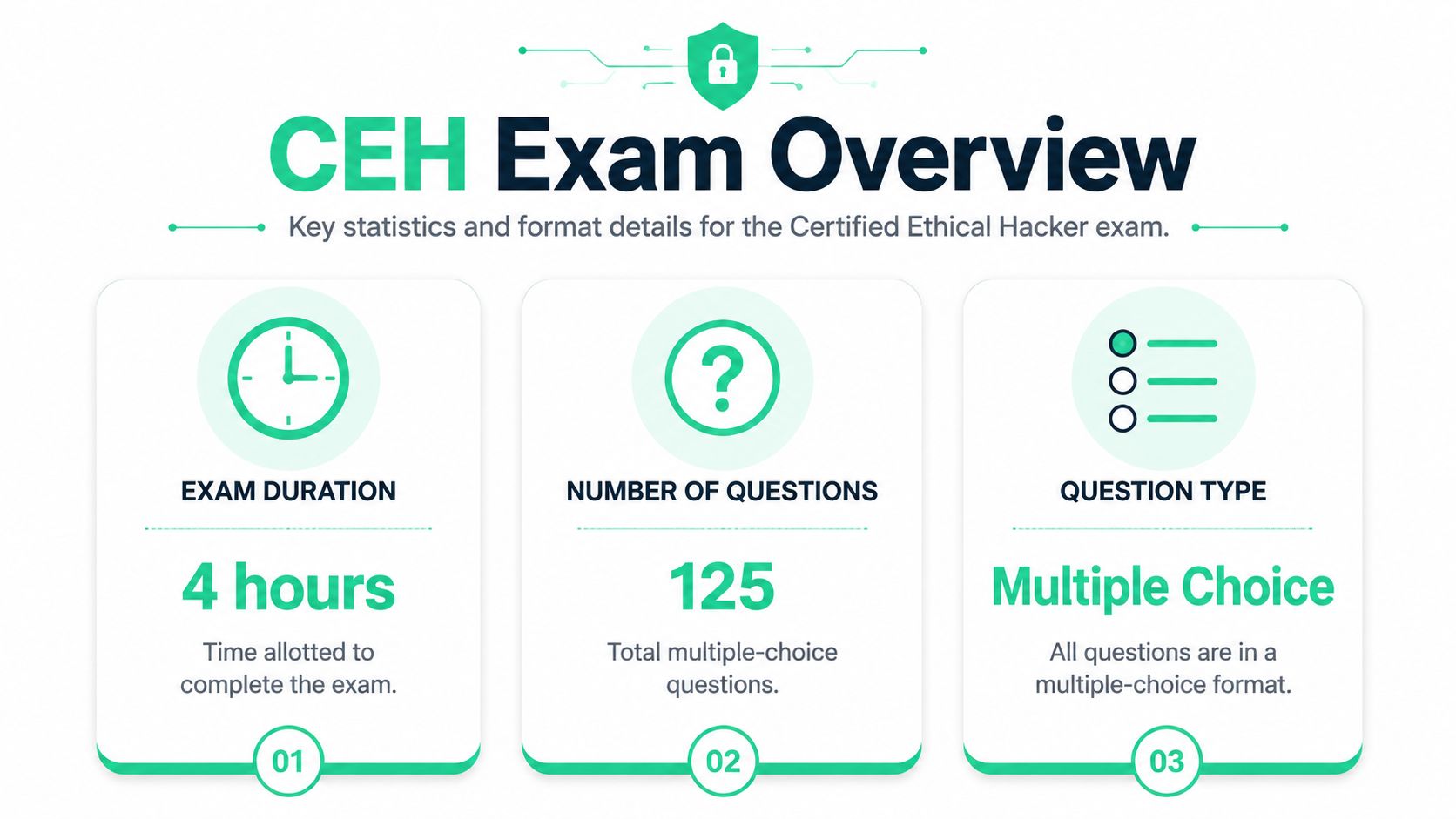
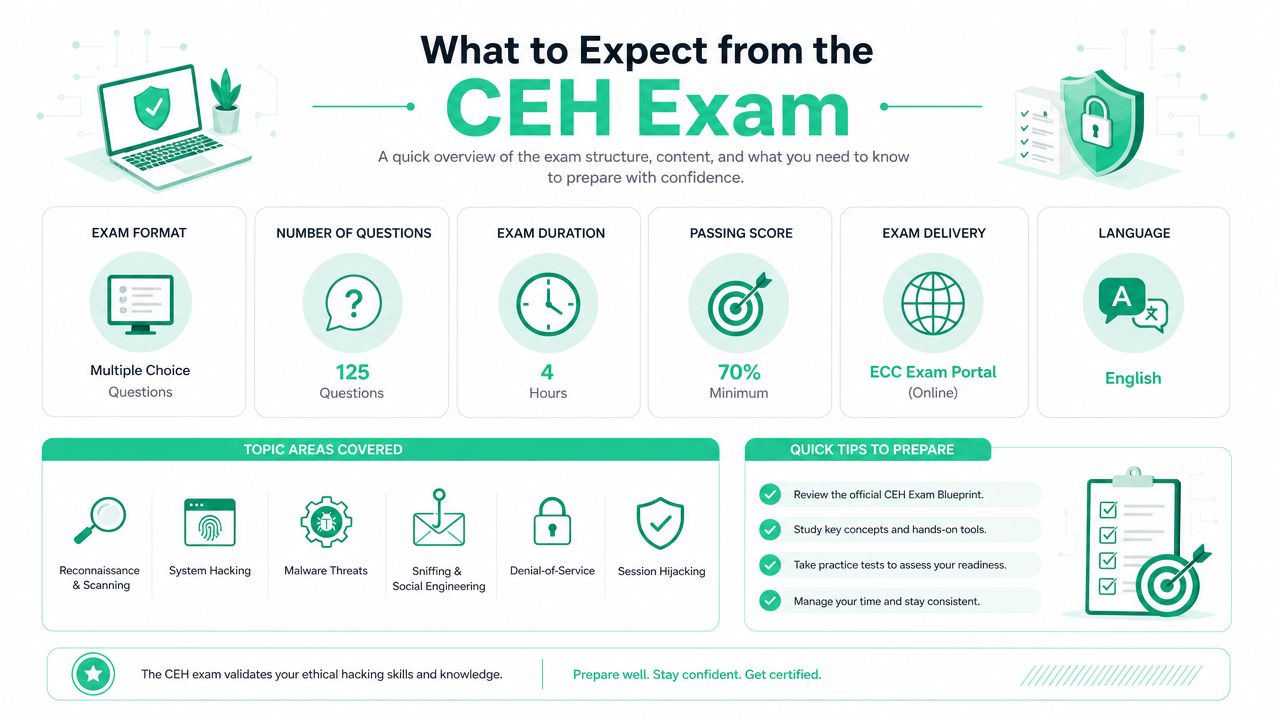
The CEH exam is built to test range and speed. EC-Council describes it as a multiple-choice knowledge exam, encompassing the core domains of ethical hacking, from reconnaissance and scanning to exploitation concepts, web attacks, malware, wireless, cloud, and reporting, as outlined on the official CEH program page.
For a hiring manager, that matters because broad coverage is usually what saves time and money on a real engagement. A tester with that baseline should know where to look first, which weak points tend to travel together, and how to avoid wasting billable hours chasing low-value noise.
That does not mean CEH proves deep hands-on skill by itself. It proves the tester has studied the major attack paths and can recognize common offensive security patterns fast. That is useful. It helps you filter out vendors who talk well in sales meetings but staff your project with people who only know one niche.
Broad knowledge wins early in most pentests.
If your goal is a practical assessment of a web app, external perimeter, cloud setup, or hybrid environment, you want someone who can cover the likely failure points in one pass and explain business risk clearly. That is why CEH still matters in hiring. It gives you a baseline signal that the person understands the full field, not just one toolset.
Use that signal correctly. Ask whether the assigned tester has CEH, then ask for proof of hands-on work, sample findings, and a report section that shows clear writing. If you want a plain-English explanation of why this kind of work matters before you buy, you can discover ethical hacking benefits.
If someone on your team is studying for CEH, these science-backed study techniques are a smart way to build recall instead of cramming and forgetting.
Navigating the Application Process and Fees
Now, the CEH conversation gets real. Cost.
A lot of CEH content talks about eligibility like it's the main hurdle. It isn't. For many people, the bigger issue is paying for the path. One source notes the exam alone can be around $1,200, while the training-plus-exam path can total roughly $3,000–$5,000, which creates a real barrier for people without employer support, as discussed in this CEH cost breakdown.

Why managers should care about the price
You're not paying these costs directly when you hire an outside penetration testing team. But those costs affect the talent market you're shopping in.
A certified tester invested real money and time to get there. That doesn't automatically make them better than every uncertified tester, but it does explain why serious vendors build teams around people who already crossed that hurdle instead of trying to train from scratch right before a client deadline.
The business decision is straightforward
If your immediate goal is compliance, a client deliverable, or a fast pen test before release, training an internal person up to CEH level usually isn't the fastest route.
Your better options are usually:
Hire an already-certified external team
You get immediate access to people who are ready to perform the assessment now.Reserve internal training for long-term staffing
That makes sense if you're building in-house security capability over time, not if you need a report fast.Compare certs to actual delivery speed
A cheap provider who takes forever is still expensive if they delay release or miss the audit window.
Cheap on paper and slow in practice is still expensive.
This is why I'm blunt about certification economics. If a vendor already has CEH-, OSCP-, or CREST-certified staff, they've already absorbed the qualification burden. For buyers, that often means less ramp time and less operational drag.
Keeping Your CEH Certification Active
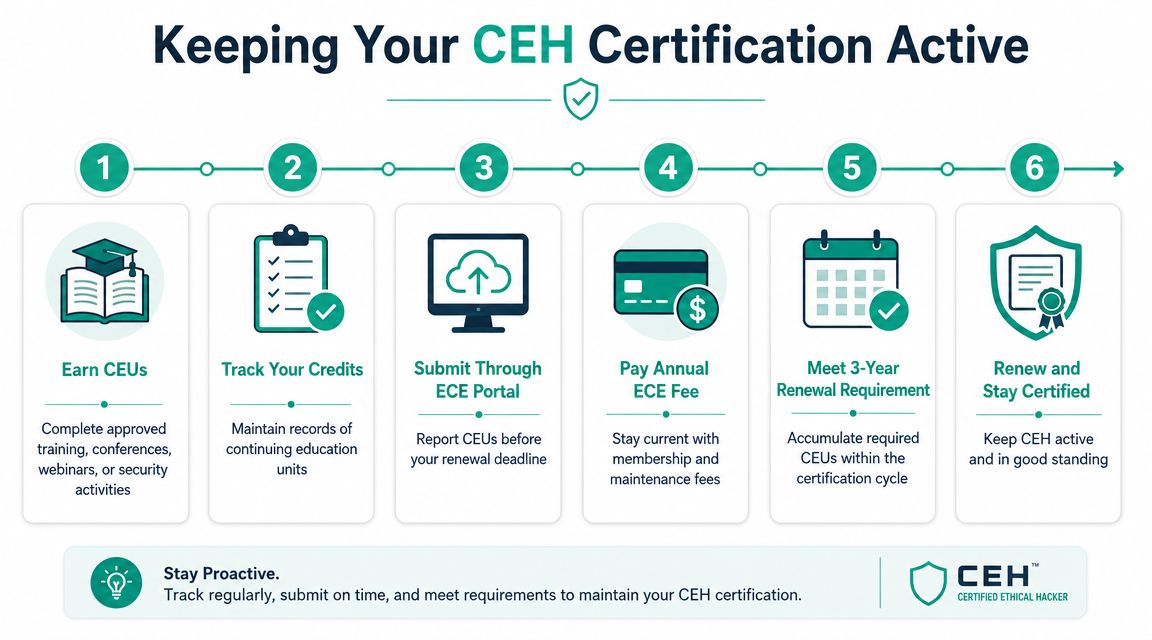
CEH isn't a lifetime badge. It stays valid for 3 years and requires 120 Continuing Professional Education credits during that period, plus an annual membership fee of about $80 USD, according to this CEH renewal overview. In practice, that works out to roughly 40 credits per year.
Why recertification matters to buyers
This is one of the more useful parts of CEH. The cert forces some level of ongoing skill maintenance.
Security changes too fast for stale knowledge. Attack paths shift. Cloud mistakes evolve. Web application issues show up in new places. A tester who maintains certification is at least staying engaged with continued learning instead of relying on what they knew years ago.
What active status signals
For an IT manager or CISO, active certification suggests a few practical things:
The tester is still investing in the field
They're keeping the credential current instead of letting it lapse.Their employer likely supports ongoing development
That usually translates into a more mature delivery team.They're less likely to be stuck in old playbooks
Good penetration testing depends on current thinking, not recycled checklists.
If a vendor mentions CEH, ask whether it's active. Expired certs tell you a lot about how they treat professional standards.
Don't overrate the badge
I like the renewal model, but keep perspective. Active CEH is a positive signal, not a final verdict.
You still need to check how the team scopes tests, how clearly they report, and whether they can explain risk in plain English to engineers and auditors. The cert shows discipline. The engagement shows competence.
Why CEH Matters for Your Next Pentest
Here's the blunt answer. CEH matters because it helps you hire faster with less guesswork.
When you're buying a pentest, pen test, or full penetration testing engagement, you don't have time to decode every vendor's internal quality process. Certifications give you a shortcut. CEH tells you the tester cleared a recognized baseline. OSCP and CREST can push that signal further, especially for hands-on depth.
What CEH proves in a hiring conversation
A CEH-certified tester has already shown they can get through a real eligibility gate and pass a broad knowledge exam. That doesn't mean you should hire on CEH alone. It means the person is less likely to be a total novice dressed up by marketing.
That's useful when you need to move quickly and still protect quality.
How this affects cost and speed
Experienced, certified testers usually need less internal oversight. They know how to structure a test, validate findings, and produce reporting that your technical team can act on.
That matters a lot if you're frustrated with traditional firms that drag out kickoff, burn time in status calls, and deliver a report after the urgency has passed.
A practical buying checklist looks like this:
Check certification mix
CEH is solid. CEH plus OSCP or CREST is stronger for penetration testing work.Ask who writes the report
Strong testers still fail if the final report is muddy or auditor-unfriendly.Ask about turnaround early
Speed should be operational, not aspirational.
If your goal is audit readiness, this guide on pentesting for compliance is worth reviewing. And if you need an option focused on startup and SMB delivery, Affordable Pentesting provides penetration testing and compliance services with certified testers, including CEH- and OSCP-aligned skill coverage.
Frequently Asked Questions About CEH
Is CEH enough by itself
CEH helps you screen candidates fast. That is its value.
For hiring a pentester or choosing a testing vendor, treat CEH as an initial filter, then press on the parts that affect delivery. Ask for hands-on proof, reporting samples, and a clear explanation of test scope and method. CEH shows baseline security knowledge. It does not show how well someone performs under time pressure, how cleanly they validate findings, or whether your team will get a report they can act on without three follow-up calls.
Is CEH entry level or mid-career
Treat CEH as an early-to-mid career credential, not a beginner badge.
The eligibility gate alone tells you that. Candidates usually qualify through official training or prior security experience, as noted earlier in this article. That matters if you are trying to avoid junior testers who sound polished in a sales call but need heavy supervision once the work starts.
For a hiring manager, that distinction saves time and money. You can use CEH to screen out obvious mismatches, then spend your interview time checking practical testing ability instead of re-verifying basic security exposure.
What changed with CEH Master
CEH Master is the stronger signal because it adds a practical component. EC-Council outlines the CEH program and practical path on its official certification page: EC-Council Certified Ethical Hacker.
That difference matters in the buying process. If a vendor says their team has CEH, ask whether that means the standard exam only or the practical track too. A practical layer gives you more confidence that the tester can work through realistic tasks instead of just answering multiple-choice questions.
Should you ask vendors about CEH v13
Yes. Ask two direct questions. Are your testers current on the latest CEH version, and do any of them hold the practical add-on or a stronger hands-on certification alongside it?
You are not asking for trivia. You are checking whether the team stays current and whether they invest in skills that reduce delays during the engagement. Current knowledge helps. Current knowledge plus hands-on ability is what shortens retesting cycles and improves report quality.
Should you require CEH for every pentester
No. Require evidence that the team can test efficiently, communicate clearly, and deliver useful findings on schedule.
A smart requirement set is simple. Ask who will do the work, what certifications they hold, what similar environments they have tested, and how fast they deliver a usable report. That approach is better than blindly requiring CEH for every person on the project, especially if your real goal is a fast, affordable penetration test rather than a long vendor checklist exercise.
If you need a fast, affordable pentest, pen test, or penetration testing engagement for compliance or release readiness, contact Affordable Pentesting through the site's contact form. Ask who will perform the test, which certifications they hold, and how quickly they can deliver a report you can use.