.svg)
Confused about internal vs external penetration testing? One checks for unlocked doors from the outside, while the other sees what a malicious employee could do from the inside. We provide fast, affordable manual pentests that find real issues, with reports delivered in a week.

Understanding The Two Main Types Of Pentesting
Let's break down what each test means for your business. Think of it like securing an office building. One test checks the locks on the outside, and the other checks what happens if someone gets inside.
External penetration testing is like hiring someone to check for unlocked doors from the street. An internal penetration test assumes the attacker is already in the building, like a disgruntled employee or a contractor with a compromised laptop. Both are important for total security, but they answer fundamentally different questions about your risk posture.
Why External Pentesting Is Your First Defense
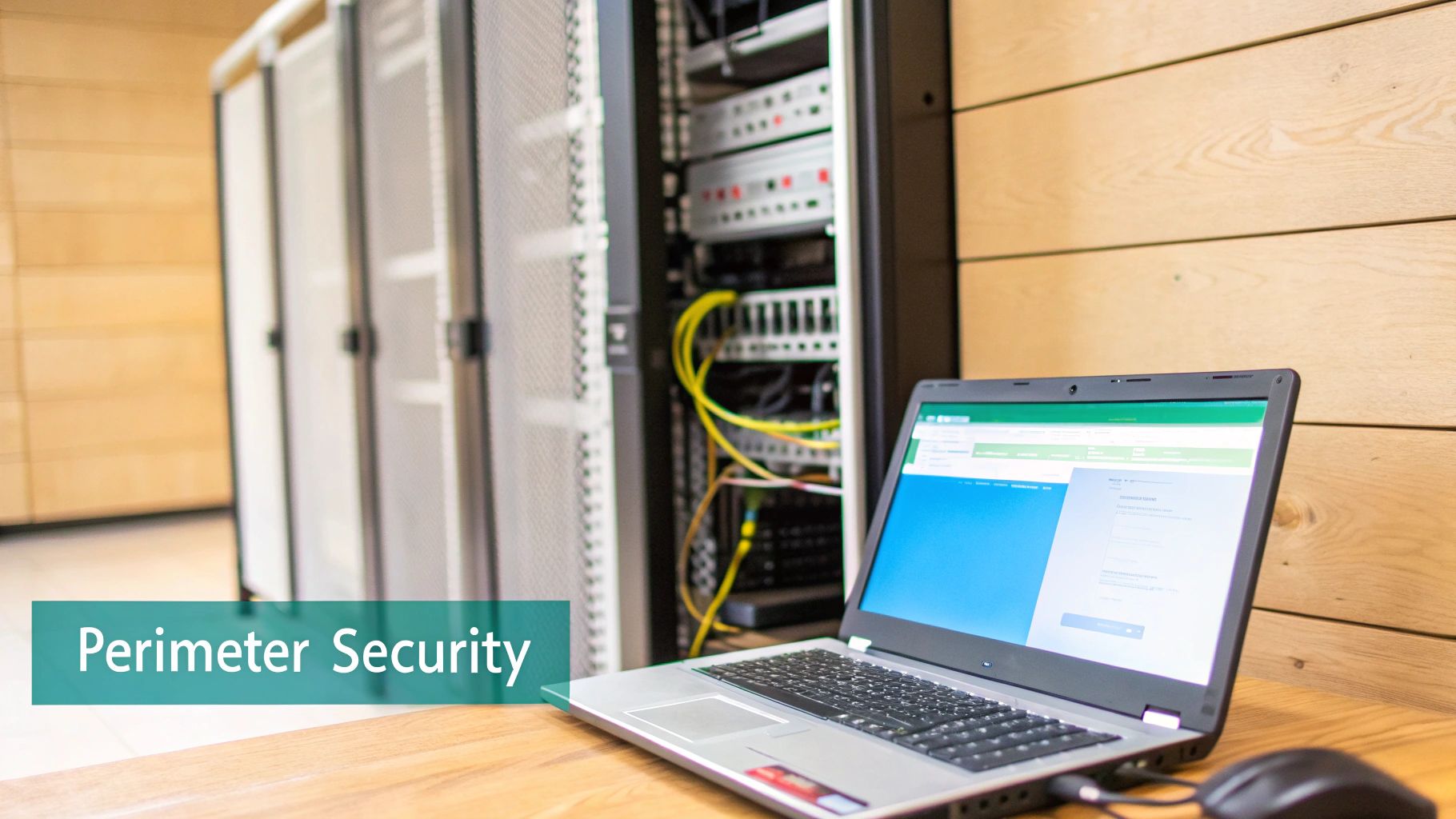
An external test is your first line of defense. It simulates an attack from a random hacker on the internet who has no special access to your systems. This is the most common attack vector for small and mid-sized businesses because your public-facing assets are visible to anyone with an internet connection.
Our OSCP, CEH, and CREST certified testers check all your public-facing systems like your website, mail servers, VPN gateways, and APIs. The goal is simple: find and fix the holes an attacker would use to break in. This is the most crucial first step to securing your business, and it is the test most compliance frameworks require at minimum.
Uncovering Your Hidden Internal Security Risks
So, what if a hacker gets past your firewall? Or what if the threat is already inside? An internal penetration test answers that question. It assumes an attacker is already on the network, maybe by stealing an employee's login details through phishing, or through a compromised vendor connection.
From there, our certified pentesters see how much damage they can do. They look for weak internal passwords, unpatched software, Active Directory misconfigurations, and ways to escalate privileges and access your most sensitive data. This test shows you where your biggest, most damaging risks really are, and the results frequently surprise IT teams who assumed their internal network was locked down.
Internal tests are especially important for organizations with flat network architectures, shared credentials, or a mix of legacy and modern systems. These environments give attackers the room to move laterally and reach crown jewel assets like databases, file shares, and admin consoles.

Comparing External vs Internal Pentesting: Key Differences
To make it super simple, here's a quick comparison.
Basically, one protects your front door, and the other secures your valuables inside. You need both for a complete security picture, but you don't always need both at the same time.
Meeting Compliance Needs Like SOC 2 And PCI DSS
For many IT managers, pentesting is just a box to check for an audit. We get it. Our job is to make that process painless, affordable, and fast so you can get back to work.
Compliance rules like PCI DSS are strict and require both internal and external tests annually. Frameworks like SOC 2, HIPAA, and ISO 27001 are more flexible but still expect you to prove you're testing your defenses. An external test is almost always required for any compliance framework, and adding an internal test demonstrates a mature security program that auditors appreciate.
Don't overpay just to satisfy an auditor. Our OSCP, CEH, and CREST certified testers deliver the detailed reports auditors need within a week, at a price that makes sense. We make compliance easy and affordable.
Our Affordable And Fast Pentesting Process
Tired of high prices and slow reports from traditional security firms? We built our company to fix that. We offer affordable, manual pentesting for businesses that need real results without the enterprise budget.
Our process is built for speed and value. We provide clear, upfront pricing so you know exactly what you're paying for. Most importantly, we deliver your complete, actionable report within one week of the test starting. This means your team can start fixing critical issues right away instead of waiting months for a document that sits in a drawer.
How To Choose The Right Pentest For You
So, internal or external? Let's make it easy. The choice depends on where your biggest risks are right now. You shouldn't ever pay for testing you don't actually need.
If you're launching a new website or app, start with an external pentest. Your biggest threat is an outsider trying to get in. If you handle sensitive customer data or need to meet compliance, you will likely need both internal and external tests.
Our advice is simple: start with an external test to lock down your perimeter. Once that's secure, an internal test can show you what damage an insider could do. We'll help you figure out exactly what you need without trying to upsell you.
Ready to secure your business the smart and affordable way? We deliver fast, no-nonsense manual penetration tests with reports in under a week.