.svg)
Security Risk Assessment Guide
You're probably dealing with one of two problems right now. An audit is coming, or you already know your environment has weak spots and nobody has given you a straight answer on what matters most.
That's where security risk assessment stops being paperwork and starts being useful. It's a structured way to figure out what could go wrong, what would hurt the business most, and what to fix first. Not someday. This week.
A lot of companies get ripped off here. They pay for bloated consulting, get a slide deck full of obvious advice, then wait months for a report that doesn't help them pass SOC 2, PCI DSS, HIPAA, or ISO 27001 reviews. That's nonsense. You need a practical process, plain language, and evidence you can hand to an auditor.
Your No-Nonsense Introduction to Risk Assessment
Security risk assessment is simple at its core. You list what matters, identify what could harm it, figure out how exposed it is, and rank the problems so your team can act.
Locking up a shop at night illustrates the process well. First you decide what's valuable. Then you check where the doors and windows are. Then you ask which ones are easiest to break into and what happens if someone gets in. That's it.
The business reason is obvious. In 2024, the FBI's Internet Crime Complaint Center received 859,532 cybercrime complaints with reported losses of $16.6 billion, while the global average cost of a data breach was $4.4 million, according to ZenGRC's review of cyber risk measurement. If you're still relying on gut feel, you're gambling.
A lot of readers in this spot are also trying to balance compliance with real protection. If you need a plain-English outside perspective on safeguarding your business from cyber risks, that resource gives a useful business-level view without drowning you in jargon.
Practical rule: If your team can't explain your top five security risks in one meeting without opening ten different tools, your assessment process is broken.
The good news is you don't need a giant budget to fix that. Start with a scoped review, a working asset list, and a real ranking method. Then validate the high-risk areas with targeted pen test work instead of buying another dashboard.
If you want a simple example of how that thinking gets organized, this Affordable Pentesting risk analysis page is a useful starting point.
Understanding Risk Assessment Core Concepts
Many teams make security risk assessment harder than it needs to be. The core ideas are basic, and once you understand them, the whole process gets less intimidating.

What assets really are
An asset is anything the business depends on or would hate to lose. That includes customer data, source code, cloud systems, payment workflows, internal admin panels, employee accounts, and key vendors. It is not just “servers.”
If you're a startup, your biggest asset might be your production web app and the customer records behind it. If you're in healthcare, it might be regulated data flows and the systems that touch them. If you process cards, it's the payment environment and anything connected to it.
Threats and vulnerabilities are not the same
A threat is the thing that can cause harm. A criminal group, ransomware, a bad insider decision, a compromised vendor update, or a sloppy API integration all count.
A vulnerability is the weakness that lets that threat succeed. Weak access control. Unpatched software. Bad session handling. Overly broad cloud permissions. Missing logging. Trusting a third party too much.
Put those together and you get a risk scenario. A public admin panel with weak authentication is a vulnerability. Account takeover is the threat. Customer data exposure is the impact.
If your spreadsheet says “cyberattack” and nothing else, that's not a risk assessment. That's a vague fear.
Risk means likelihood and impact
Many organizations utilize a variation of likelihood × impact. This approach is effective because it requires you to avoid treating every single issue with identical urgency.
Historically, risk assessment moved from loose expert judgment into structured models that combine quantitative inputs with weighted expert judgment, and that hybrid approach now supports compliance reviews such as SOC 2, PCI DSS, and ISO 27001, as described in this peer-reviewed overview of structured security risk methods. In plain English, smart teams don't guess. They score with evidence.
A decent rule for small and midsize businesses is to keep the model simple enough that your team will use it. If you want a practical breakdown of qualitative vs quantitative risk models, start there and avoid overengineering the math.
Frameworks are recipes, not religion
NIST and ISO 27001 matter because they give you a proven recipe. They help you avoid skipping steps, and that matters when an auditor asks why a risk was ranked high or low.
If you want another business-focused lens, this ABCO security framework overview is helpful because it frames risk management in a way non-specialists can follow.
Here's the important part. You do not need to memorize a framework. You need to follow a defensible process, document it, and make decisions your team can explain.
Defining Your Assessment Scope and Assets
Bad scope ruins security risk assessment before it even starts. If your boundaries are fuzzy, your results will be fuzzy too.

Draw a hard boundary first
Pick what's in and what's out. If you're preparing for SOC 2, maybe the in-scope environment is your production app, cloud tenant, identity platform, logging stack, and the vendors that process customer data. Your marketing site might be out. An internal test lab might be out. Old systems nobody uses should probably be retired, not assessed forever.
Expert guidance consistently treats scope definition and asset identification as the first real steps, and it also warns that scoring risk without an asset inventory and control baseline turns the whole exercise into something arbitrary and hard to defend in audits, as outlined in SentinelOne's security risk assessment guide.
That point matters more than people admit. If you don't know what you own, what data it handles, and what controls already exist, your “high risk” labels are just opinions.
Build an asset list that matters
You do not need to catalogue every keyboard and spare monitor. Focus on assets that create revenue, store sensitive data, provide critical access, or could break compliance if compromised.
Use a short list like this:
- Revenue systems. Production apps, checkout flows, booking systems, customer portals.
- Sensitive data stores. Databases, file stores, backups, analytics platforms with regulated or customer data.
- Control points. Identity providers, VPNs, admin consoles, cloud management accounts.
- Dependencies. Payment processors, cloud hosting, API providers, outsourced support tools.
That list is enough to get moving.
Good scoping cuts cost. It stops you from paying to assess low-value systems while your real crown jewels stay exposed.
Match controls to assets
For each asset, note the controls already in place. Examples include MFA, encryption, web application firewall rules, logging, backup coverage, change approval, and vendor review. This becomes your control baseline.
Then ask a blunt question. Are those controls real, current, and tested, or are they just written in a policy? Auditors care about both paper and proof. Attackers only care about proof.
This is also where scanners help, but only up to a point. A vulnerability scanner can flag known technical issues. It won't reliably tell you whether a low-privilege user can jump into admin functions, whether a workflow lets someone bypass approvals, or whether an API exposes data through broken business logic.
That gap is why manual pentesting matters. A well-scoped pen test or penetration test validates the assumptions in your risk assessment and finds the ugly stuff scanners miss. For startups and SMBs, that's often the fastest way to turn a rough scoping exercise into something credible.
Identifying Threats and Analyzing Your Risks
Once you know the scope and the important assets, you can stop waving your hands and start ranking real problems.
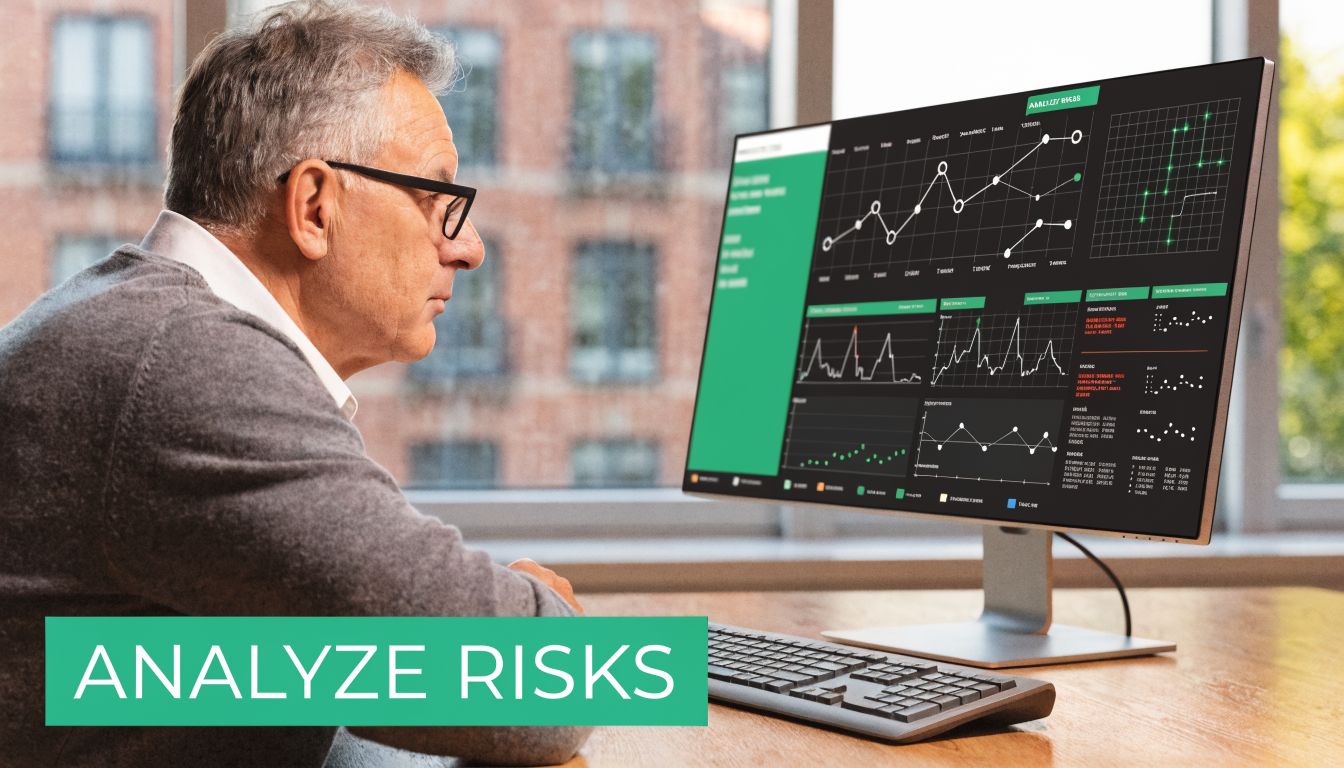
Start with realistic threat sources
It is common for teams to overfocus on random internet attackers and underfocus on trusted paths. That's a mistake.
Organizations often miss risks from vendors, software libraries, APIs, and cloud services, and a major challenge is ranking vendor risk without a full-time GRC team, as noted in Sprocket Security's discussion of risk assessment blind spots. That's exactly why many classic assessments feel incomplete. They look inward and ignore the third parties with privileged access.
Your short threat list should usually include:
- External attackers who target internet-facing apps, exposed services, and weak credentials
- Internal misuse from excess privileges, poor offboarding, or careless handling of data
- Third-party failures from vendors, MSPs, cloud platforms, libraries, and integrations
- Operational mistakes like bad changes, weak backups, or incorrect access settings
Find weaknesses the right way
There are three practical inputs here. Documentation review, automated testing, and manual validation.
Documentation review tells you how the system is supposed to work. Automated scans help identify known weaknesses. Manual review and pen testing tell you how the system behaves under pressure.
That last part matters most for apps and APIs. An automated tool might catch a missing header or known software issue. An experienced tester can find privilege escalation, insecure workflows, weak authorization, and chained issues that only make sense in the context of your business.
If your environment includes a web app, mobile backend, customer portal, or internal admin panel, skipping manual penetration testing is lazy. It's cheap in the wrong way, and it usually becomes expensive later.
A scanner tells you what it recognizes. A human tester tells you what an attacker can do.
Use a simple scoring model
Do not build a giant risk engine. Use a repeatable model your team can defend.
A basic 1 to 5 likelihood scale and 1 to 5 impact scale is enough for most SMBs. Multiply them to get a risk score. Higher scores get attention first.
Here's a simple example:
| Risk | Likelihood | Impact | Score |
|---|---|---|---|
| Admin portal missing strong access controls | 4 | 5 | 20 |
| Old internal test server with no sensitive data | 2 | 2 | 4 |
| Vendor API with broad customer data access | 3 | 5 | 15 |
That gives you a practical priority order. Not perfect. Good enough to act on.
Build a usable heatmap mindset
You don't need a fancy GRC platform. A spreadsheet with color coding works.
- Red zone. High likelihood and high impact. Fix these first.
- Amber zone. Real risk, but not immediate catastrophe. Schedule remediation with an owner and due date.
- Green zone. Accept, monitor, or clean up when higher priorities are done.
Use the score as a decision aid, not a substitute for judgment. A medium-scoring issue in a payment system may deserve faster action than a similar score in a low-value internal tool.
Keep a plain-English risk register
Your risk register should read like something a founder, auditor, and engineer can all understand. If nobody outside security can follow it, you've written the wrong thing.
A simple format works well:
- Risk description. What could happen and why it matters
- Asset. What system or process is affected
- Cause. The threat and the vulnerability together
- Likelihood and impact. Your ratings
- Owner. Who fixes or accepts it
- Evidence. Scan result, architecture note, or penetration testing finding
- Next step. Remediate, mitigate, transfer, or accept
That turns analysis into decisions. Which is the whole point.
Building Your Risk Register and Action Plan
A security risk assessment without documentation is just a meeting you'll have to repeat. The risk register is where your assessment becomes real.
NIST SP 800-30's model includes steps such as system characterization, control analysis, and results documentation so assessments stay auditable, and one common failure is skipping documentation of results or control recommendations, which makes reassessment and trend tracking fall apart, as summarized in ZenGRC's explanation of the NIST risk assessment process.
Use a spreadsheet before buying software
You do not need a GRC platform on day one. A clean spreadsheet works if people consistently maintain it.
Copy this structure and start filling it in:
| Risk ID | Risk Description | Asset | Likelihood (1-5) | Impact (1-5) | Risk Score | Remediation Plan | Owner |
|---|---|---|---|---|---|---|---|
| R-001 | Broken access control could expose customer records | Customer portal | 4 | 5 | 20 | Fix authorization checks, retest, update access review | Engineering |
| R-002 | Vendor support tool has unnecessary privileged access | Support platform | 3 | 4 | 12 | Reduce permissions, review contract controls | IT |
| R-003 | Legacy internal app lacks logging | HR tool | 2 | 3 | 6 | Add logging, monitor until replacement | Ops |
This works because it answers the only questions that matter. What's wrong, how bad is it, who owns it, and what happens next?
Prioritize like an adult
Not every issue needs a fire drill. Some need immediate remediation. Some need compensating controls. Some can be accepted with a written rationale.
Use a simple order:
- Fix high-risk issues first. Public-facing, sensitive data, privileged access, payment flow, regulated systems.
- Reduce blast radius next. Segmentation, least privilege, backup hardening, logging, access cleanup.
- Schedule lower-risk cleanup. Hygiene work that matters, but not before the urgent items.
Documentation is not bureaucracy. It's how you prove your team knew about a risk, made a decision, and followed through.
Validate before you close
Here's the mistake I see constantly. Teams mark a risk “resolved” because someone changed a setting or closed a ticket. That is not validation.
If a risk came from a scanner, rescan it. If it came from access control, workflow abuse, or application logic, verify it with a manual pentest, pen test, or targeted penetration test. Auditors don't love assumptions, and neither should you.
A fast manual validation cycle is usually cheaper than arguing over whether the fix worked.
Using Penetration Testing for Compliance Audits
Compliance teams and auditors don't just want a spreadsheet. They want evidence that your controls were tested in a way that reflects real attacker behavior.

A security risk assessment is the plan. A penetration test is part of the proof.
That doesn't mean you need an overpriced enterprise engagement with three kickoff meetings and a report delivered after everyone forgot why they started. For startups and SMBs, the better move is a tightly scoped manual pentest aimed at the systems your assessment already identified as high risk.
What auditors usually care about
Auditors want to see that you can identify risk, prioritize it, remediate it, and validate that the fix worked. They also want documentation they can follow without hiring a translator.
A solid penetration testing report helps because it can show:
- Scope and targets tied to your in-scope systems
- Findings with evidence instead of vague concern statements
- Severity and business context that line up with your risk register
- Retest results after remediation, when applicable
That gives your audit package teeth.
Why manual testing matters
Automated scans have a role. They are not enough for many compliance-driven environments, especially where web apps, APIs, role-based access, and custom workflows are involved.
Manual pen testing is what finds the messy, real-world flaws. Broken authorization. Privilege escalation. Workflow bypasses. Chained issues that make sense to an attacker and no one else.
If you need a practical service example, Affordable Pentesting provides web app penetration testing for organizations working toward SOC 2, PCI DSS, HIPAA, and similar requirements. The useful part is the model itself. Scoped manual testing by certified professionals such as OSCP, CEH, and CREST practitioners, with reports delivered quickly enough to fit audit timelines instead of wrecking them.
For compliance work, slow reporting is not a minor annoyance. It can hold up remediation, evidence collection, and the audit itself.
What to ask before you buy
Traditional firms often sell prestige and deliver thin findings. Ask blunt questions.
- Who performs the test. Are the testers certified, and what kind of testing do they do manually?
- How fast is the report. If you're waiting months, that's a process problem.
- What gets tested. Is it just a broad scanner pass, or is there real human validation?
- Will they retest fixes. That matters for closing audit evidence gaps.
If a vendor can't answer those clearly, move on.
Making Your Risk Assessment a Continuous Process
Security risk assessment is not a one-time project. Your environment changes, your vendors change, your product changes, and your risk changes with them.
Repeat the process when you launch a new app, change cloud architecture, onboard a critical vendor, expand regulated data handling, or prepare for a new audit cycle. Keep the scope tight, update the asset list, refresh the risk register, and validate major fixes.
That habit is what separates a company that can pass an audit cleanly from one that scrambles every year.
The smart path is simple. Assess what matters. Rank it objectively. Fix the high-risk items. Validate with a fast manual pentest. Document everything well enough that an auditor and your own team can trust it.
If you need an audit-ready penetration test without the bloated enterprise process, contact Affordable Pentesting through the contact form and ask for a scoped quote. A fast, manual pen test with clear reporting is often the shortest path to closing real risk and getting your compliance evidence in order.